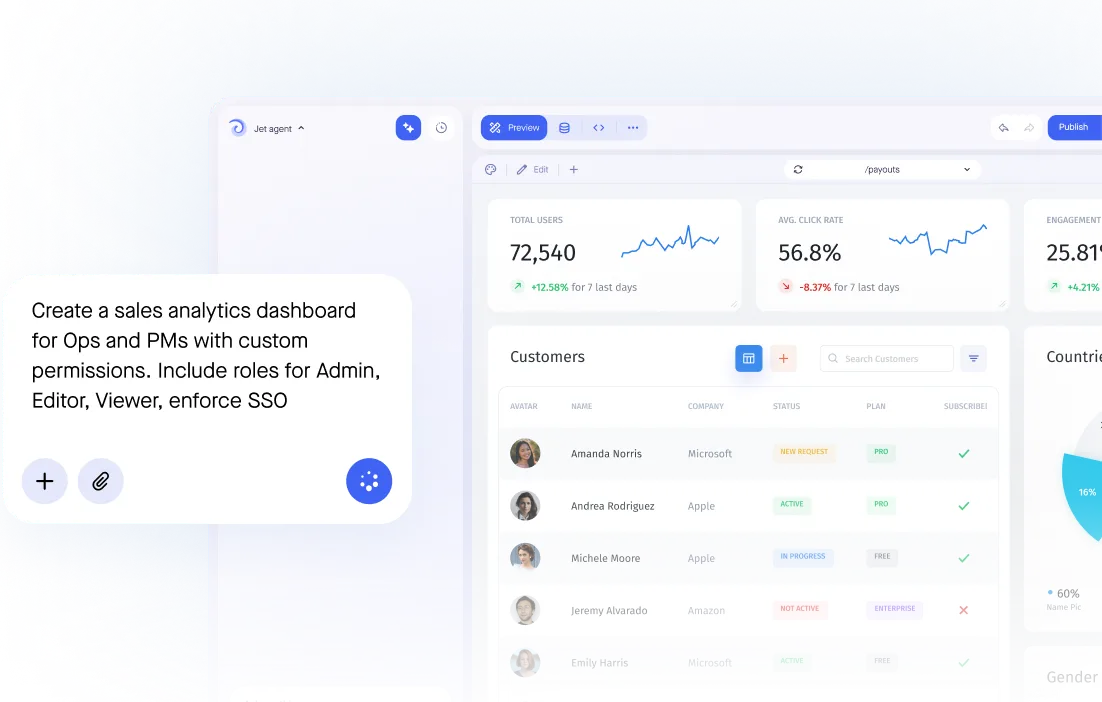
Build your own database frontend app
Database Frontend that lets you give non-engineers a safe surface over production data. Runs on the data you already have. Role-based access included.
Trusted by Some of the World’s Best Product Teams





Build exactly what your team needs
Point Jet at the database you already run and get a governed interface over it, with no migration, no schema changes and no database client handed to non-engineers.
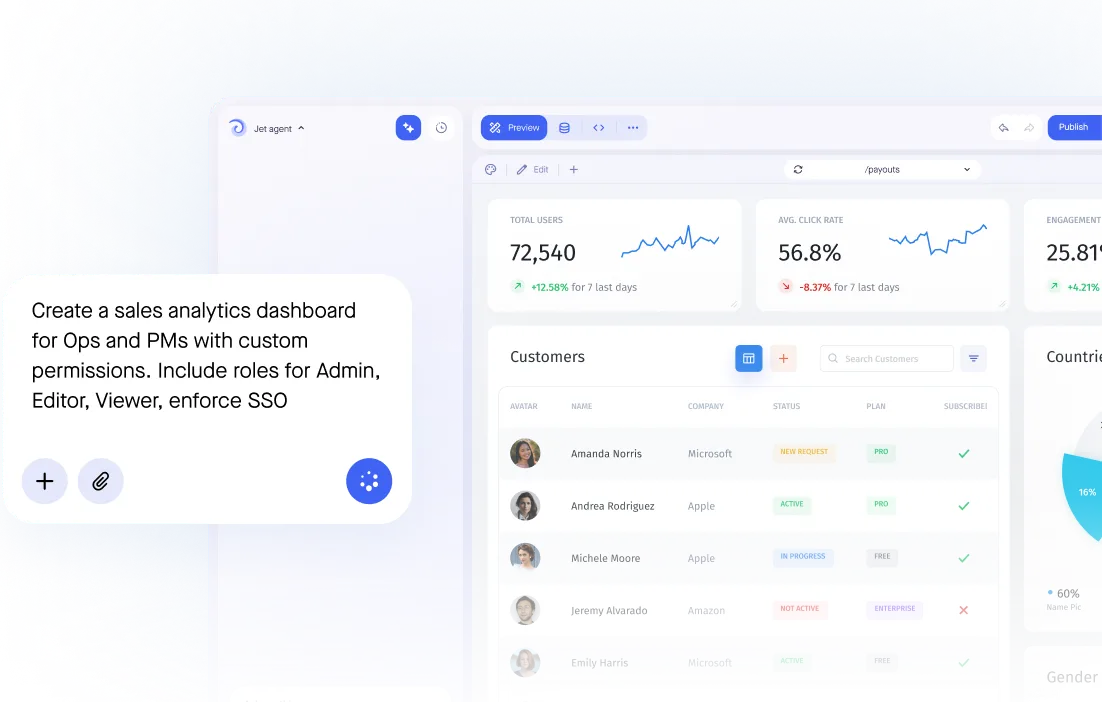

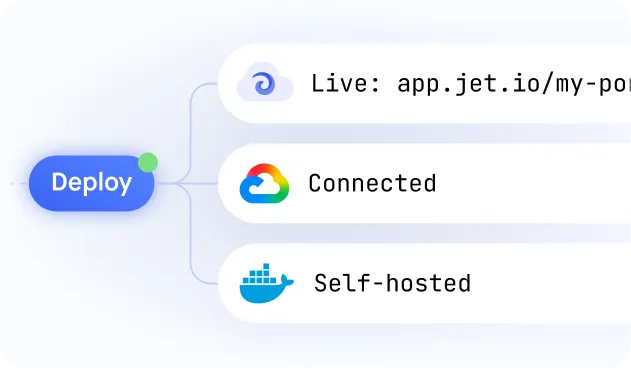
Build secure app fast



Build secure app fast
.jpeg)
One GUI, every engine
.jpeg)
SQL or visual queries
.jpeg)
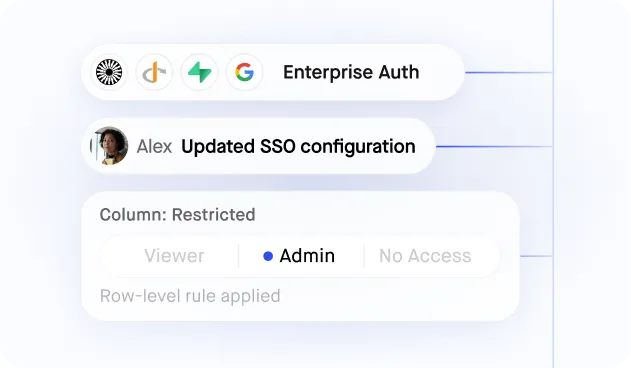
Granular user permissions
.jpeg)
Relationships and joins
.jpeg)
Write-back, no data copy
Similar Use Cases

.png)


.svg-min.png)








.png)










.png)























Frequently asked questions
An interface that lets people work with data in a database without a database client — forms, tables and views shaped for the person using them rather than for the schema.
The people who need the data but should not have a SQL console: operations, support, finance. Giving them read-write access to production through a client is the risk this removes.
Yes. The interface is generated from your live schema and then shaped — relabel fields, resolve foreign keys to names, hide the columns nobody outside engineering needs.
Yes, by table, row and field. Someone can be able to update a status without being able to touch a price.
PostgreSQL, MySQL, MariaDB, SQL Server, Oracle, MongoDB and others, plus warehouses and REST APIs, so one interface can span more than one source.