Project Management
App
Project Management
Overview
A project management template is a reusable framework that standardizes project execution - giving your team pre-built structures for projects, tasks, milestones, owners, statuses, dependencies, and reporting so you can skip the weeks of setup and start managing projects immediately. Instead of assembling spreadsheets, chasing status updates across emails, and rebuilding tracking systems for every new initiative, you get a proven structure that keeps everyone on the same page from day one.
The core problem is familiar: teams waste hours - sometimes weeks - building project tracking systems from scratch, only to end up with fragmented tools that lack dependency visibility, workload reporting, or proper access controls. 70% of projects fail globally without a management template, often because there's no single source of truth for project details, responsibilities, and timelines.
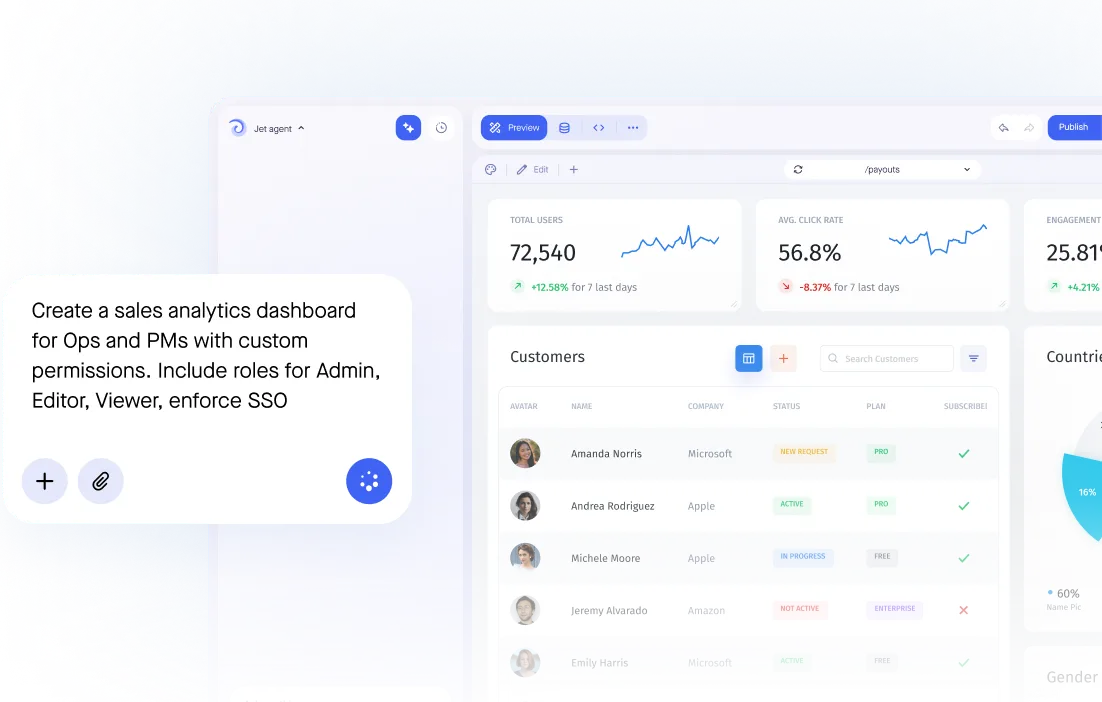
Jet Admin's project management template solves this by using AI app generation to scaffold a complete, data-connected project management app in minutes. Connect your existing data from Google Sheets, Airtable, PostgreSQL, Supabase, MySQL, or any REST API - or start fresh with Jet Admin's built-in database. The template comes pre-configured with a project portfolio dashboard, Kanban and table views, calendar and timeline tracking, owner assignment, automated workflow notifications, progress reporting, and role-based access controls separating internal team views from client-facing visibility.
This isn't a static spreadsheet you download and outgrow. Every element - from task statuses and priorities to business logic and branding - is fully customizable through visual no-code editing or JavaScript/formula transformations. Connect your data, configure your workflows, and publish a project management app tailored to how your organization actually works.
Ready to stop rebuilding project tracking from scratch? Connect your existing project data and generate a ready-to-use project management app in minutes.
Why use this project management template
When project data lives scattered across emails, spreadsheets, Slack threads, and disconnected tools, teams lose traceability - and projects lose momentum. Templates improve communication and accountability among teams by centralizing every task, milestone, owner, and deadline in one governed application. Here's what this template directly addresses:
- Eliminate scattered project data across tools. Instead of hunting through email attachments, Google Docs, and chat messages, every project's scope, deliverables, status updates, and file attachments live in a single, organized workspace. Templates help capture repetitive decisions regarding structure and roles, so your team stops duplicating effort across communication channels.
- Stop missing deadlines due to invisible dependencies. Poor visibility into task dependencies means a delay on one important task silently cascades downstream. Research shows that approximately 23% of project management tools don't support dependencies at all. This template includes dependency tracking and timeline views so you can identify potential risks before they derail your project timelines.
- Reduce manual status reporting and endless update meetings. According to Smartsheet's analysis of project management software, a major sign teams need better tools is when most of their time goes to status meetings and email threads rather than execution. Automated status updates and progress tracking dashboards replace the manual work of compiling a status report template every week.
- Prevent resource conflicts across multiple projects. When product managers, software developers, and operations leads share team members, overallocation becomes inevitable without workload visibility. This template's progress and workload reporting helps you assign tasks based on actual capacity - not guesswork.
- Improve client trust with transparent project visibility. Clients and stakeholders expect real-time access to project's progress without seeing internal team details. Role-based access controls let you create client-facing views that show deliverables, milestones, and timelines while keeping internal discussions and budget data private. Among 30 project management tools analyzed, 77% offered some form of guest access - this template makes it configurable from the start.
- Enable consistent execution across teams. Templates standardize processes across organizations for consistency. Whether your next project is a marketing campaign, a software development sprint, or a construction milestone plan, the same structure applies - reducing onboarding time and ensuring every team follows the same workflows.
Using templates can save hours of planning time, and the results compound: fewer missed deadlines, less manual reporting, and a clear project plan that adapts as work evolves.
Template features
Project Portfolio Dashboard
See every active project at a glance. The portfolio dashboard displays status indicators (On Track, At Risk, Off Track), progress charts, upcoming milestones, and overdue task counts - aggregated from task-level data across your entire project portfolio. Filter by team, client, or priority to focus on what matters. This replaces the scattered spreadsheets and slide decks teams typically assemble for leadership reporting.
Task Management with Kanban and Table Views
Organize tasks your way. The Kanban board groups tasks by status - To Do, In Progress, Blocked, Done - with drag-and-drop transitions. The table view presents a detailed task list with columns for assignee, priority, due date, dependencies, and custom fields like effort estimates or labels. A task list is a fundamental component of a project management template, and this one supports both agile sprints and traditional project tracking workflows. You can define custom statuses, add priority levels, and configure business logic rules - for example, preventing a task from moving to "Review" until its dependencies are completed.
Calendar and Timeline Tracking
Visualize your project timelines and milestones on a calendar or Gantt-style timeline. See how tasks relate to each other across time, identify scheduling conflicts, and track progress against key phases of the project lifecycle. Gantt charts visualize project timelines and task dependencies, making it easy to spot drift before it becomes a problem. This is especially valuable for project managers coordinating cross-functional work where multiple teams share deadlines.
Owner Assignment and Deadline Management
Every task needs a clear owner and a deadline. This template enforces both: assign tasks to individual team members or roles, set due dates as required fields, and configure escalation workflows. If a task becomes overdue, automated reminders notify the owner - and if it remains overdue beyond a threshold you define, the manager gets alerted. Clear responsibilities eliminate the ambiguity that stalls execution.
Comments and File Attachments
Keep collaboration contextual. Each task supports threaded comments for discussion and file attachments for documents, images, and PDFs - so conversations and deliverables stay attached to the work they reference. This replaces the fragmented email threads and Slack messages that lose context. Team members can mention colleagues directly, keeping communication tied to specific tasks rather than floating across disconnected channels.
Progress and Workload Reporting
Real-time charts show project completion rates, team's work distribution, and capacity utilization across projects. Track progress with burndown charts, cumulative flow diagrams, or custom reporting views filtered by status, priority, team, or client. These reports help product managers and project leads identify bottlenecks, rebalance workloads, and forecast whether milestones will be met - without compiling data manually.
Role-Based Access Controls
Granular permissions separate what internal team members see from what clients and external stakeholders access. Create roles like Admin, Manager, Team Member, and Client/Guest, then apply record-level filtering so clients see only project summaries and assigned deliverables - not internal comments, budget data, or resource utilization. This is essential for agencies and professional services firms managing client-facing customer portals alongside internal project operations.
Automated Workflow Notifications
Configure automated alerts for the events that matter: tasks nearing due dates, overdue items, status changes, blocked dependencies, and milestone achievements. Route notifications through email, Slack, or Gmail via workflow actions. Set up escalation rules - for example, if a task remains in "Review" for more than two days, automatically notify the project lead. Many templates allow for automation rules to enhance functionality, and this template makes those rules configurable without code.
Who is this project management template for?
- Operations teams managing internal projects across departments. Finance, HR, facilities, and administrative teams juggling multiple projects need centralized tracking to avoid duplication and resource conflicts. This template replaces the patchwork of spreadsheets and email chains with a single organized app, enabling team efficiency across the entire organization.
- Project managers at agencies and professional services firms. When you're managing client work, you need client-facing timelines, milestone commitments, transparent status reporting, and restricted access that hides internal details. This template's role-based views and approval workflows give you a project board template that serves both your internal team and your clients - similar to how you might structure a Custom CRM Template for client relationship management.
- Product and marketing teams coordinating cross-functional initiatives. Whether you're shipping a product roadmap, running a marketing campaign, or coordinating a software development release, you need timeline views for scheduling, Kanban for sprint tracking, and workload reporting to balance capacity across designers, engineers, and marketers. Templates can be shared in a centralized location for team access, keeping every stakeholder aligned on project objectives.
- Remote and hybrid teams needing a shared source of truth. Remote teams depend on asynchronous communication. Task-specific comments, file attachments, automated notifications, and real-time dashboards replace the status meetings and email chains that drain productivity across time zones. Using templates can enhance team collaboration and accountability in projects where face-to-face alignment isn't an option.
- Startups building their first structured project management system. You've outgrown spreadsheets but don't need a heavyweight PMO tool. This template gives you a best project management template foundation - connect your existing Google Sheets or Airtable data, customize fields as your processes mature, and develop your project management plan without complex software or a dedicated admin team.
- Clients and external stakeholders needing transparency. Whether you're an agency offering a progress portal or a services firm sharing deliverables, this template's filtered views let external users track progress on their projects without seeing internal team details, budget data, or resource workload.
How to set up your project management template
Getting started doesn't require technical skills or weeks of configuration. Project management follows five structured phases - initiation, planning, execution, monitoring, and closure - and your setup process mirrors that structure.
Step 1: Select the template
Choose the Project Management Template. It comes pre-scaffolded with records for projects, tasks, milestones, owners, clients, statuses, priorities, dependencies, comments, attachments, and dashboards - a complete project tracking template ready to customize.
Step 2: Connect your existing data source
If your project data already lives in Google Sheets, Airtable, PostgreSQL, Supabase, or MySQL, connect it natively through Jet Admin's data connectors. For tools like ClickUp, monday.com, or Notion, connect via REST API. Two-way sync ensures updates in the template app reflect in your existing database and vice versa. Starting fresh? Use Jet Admin's built-in database and begin entering projects directly. You can customize project management templates in Excel and Google Sheets, or go deeper with a connected database.
Step 3: Map your project fields and customize business logic
Match your existing fields - task owner, due date, priority, dependencies, project scope - into the template's schema. Customize statuses (Backlog, In Progress, In Review, Approved, Completed), priorities (High, Medium, Low), and labels. Add custom fields like estimated hours, budget, or compliance level. Define status transition rules - for example, requiring approval before a task moves from "Review" to "Done." Key elements in project management templates include project goals and scope, and this step ensures those align with your organization's actual workflows.
Step 4: Configure the interface with your preferred views and branding
Choose the views that match how your team works: Kanban board for agile workflows, table view for detailed task management, calendar for deadline tracking, and timeline for Gantt-style project visualization. Configure filters, sorting, and grouping by project, priority, client, or team. Apply custom branding - logo, color theme - especially for client-facing dashboards. Customizing templates can improve alignment with organizational workflows and make adoption faster.
Step 5: Set up automated workflows for reminders and escalations
Define automation rules: send email or Slack notifications when tasks are nearing due dates, trigger escalation alerts when items remain overdue beyond a threshold, notify reviewers when a task status changes. Use Jet Admin's workflow automation to configure these triggers without writing code. Templates reduce project setup time significantly - this step replaces hours of manual notification setup with configurable rules.
Step 6: Configure role-based permissions
Set up roles for your internal team (Admin, Manager, Team Member) and external users (Client, Guest). Apply record-level filtering so clients see only their associated projects, assigned tasks, and progress summaries - not internal comments, resource utilization, or budget breakdowns. Project management templates include sections for task breakdown and role assignments, and this step ensures those assignments translate into proper access controls.
Step 7: Test with a pilot project and publish
Run one project through the complete workflow: create tasks, set dependencies, test view changes, verify notifications fire correctly, and confirm client-facing views show the right data. Gather feedback from team members, adjust field definitions and workflow triggers, then publish for your full team and stakeholder group. The planning phase involves breaking down the project into detailed tasks and timelines - your pilot validates that breakdown works in practice.
Ready to turn your existing project data into a structured, governed project management app? Start with the template and connect your data today.
Frequently asked questions
What does a project management template include?
This template includes record types for Projects, Tasks, Milestones, Clients, and Owners/Team Members. Data fields cover due dates, statuses, priorities, dependencies, comments, file attachments, and custom fields for budget or time data. Views include table/list, Kanban board, calendar, and timeline/Gantt chart. Collaboration features include threaded comments and document attachments per task. Reporting includes progress charts and workload capacity views. Governance features include role-based access controls and record-level filtering. Budgets and resources should be included in project management templates, and risk logs are essential for identifying potential issues - both are supported through customizable fields.
Can I connect an existing project database or tool?
Yes. Jet Admin supports native connections to PostgreSQL, MySQL, Supabase, Google Sheets, and Airtable. For tools like ClickUp, monday.com, or Notion, connect via REST or GraphQL API. Connections support two-way sync, so your data stays current whether edited from the template app or the external source. Excel offers free editable templates for project tracking, and you can connect spreadsheet data directly rather than re-entering it. Templates can include custom fields like "Client Tier" or "Compliance Level" mapped from your existing schema.
Can I customize task statuses and views?
Fully. Task statuses, priorities, and labels are customizable through visual editors - no code required. Views are configurable as Kanban boards, tables, calendars, or timeline/Gantt charts, with filtering, grouping, and sorting options. You can also use JavaScript or formula logic for calculated fields, conditional formatting, or enforcing workflow rules such as preventing status advancement until dependencies are met. Templates aid in tracking project status and managing dependencies effectively.
Can clients have restricted access to project data?
Yes. Role-based access controls with record-level filtering let you create Client or Guest roles that see only specific records - their associated projects, assigned tasks, and project summary dashboards. Internal comments, sensitive documents, budget data, and resource workload views can be hidden. Write access can be restricted so clients can view and comment but not modify task assignments or statuses.
Can deadline reminders be automated?
Yes. The template supports configurable workflow rules: triggers based on approaching due dates, overdue thresholds, or status changes can send notifications via email, Slack, or Gmail. Escalation workflows let you define what happens when deadlines are missed - such as notifying a manager if a task remains overdue for 24 hours. You decide what triggers, when, and who gets notified.
Can I track budgets or time alongside tasks?
Yes. The data model supports adding custom fields for budget, actual spend, estimated hours, and hours logged. Use formula or JavaScript transformations to compute totals, variances, or forecasts. Budget data can be tracked per project and rolled up across tasks. Among 30 project management tools analyzed, time tracking appears in only about 50% natively - this template lets you build it in from the start.
How does this compare to building from scratch?
Building a project management app from scratch requires defining data schemas, building UI views, connecting data sources, enforcing permissions, and configuring workflows - a process that can take weeks. With Jet Admin's template, you leverage AI-generated scaffolding and a pre-built structure that covers task dependencies, progress reporting, client access controls, and automated notifications out of the box. Templates enable consistent execution across different teams, and you benefit from Jet Admin's native integrations, two-way data sync, visual and code editing, and flexible deployment - without starting from a blank canvas for your next project.

.svg)







Similar templates


Connect & sync your data with 30+ data sourse’s


Build frontend Apps 10x faster


Frequently asked questions
Building a project management app from scratch requires defining data schemas, building UI views, connecting data sources, enforcing permissions, and configuring workflows - a process that can take weeks. With Jet Admin's template, you leverage AI-generated scaffolding and a pre-built structure that covers task dependencies, progress reporting, client access controls, and automated notifications out of the box. Templates enable consistent execution across different teams, and you benefit from Jet Admin's native integrations, two-way data sync, visual and code editing, and flexible deployment - without starting from a blank canvas for your next project.
Yes. The data model supports adding custom fields for budget, actual spend, estimated hours, and hours logged. Use formula or JavaScript transformations to compute totals, variances, or forecasts. Budget data can be tracked per project and rolled up across tasks. Among 30 project management tools analyzed, time tracking appears in only about 50% natively - this template lets you build it in from the start.
Yes. The template supports configurable workflow rules: triggers based on approaching due dates, overdue thresholds, or status changes can send notifications via email, Slack, or Gmail. Escalation workflows let you define what happens when deadlines are missed - such as notifying a manager if a task remains overdue for 24 hours. You decide what triggers, when, and who gets notified.
Yes. Role-based access controls with record-level filtering let you create Client or Guest roles that see only specific records - their associated projects, assigned tasks, and project summary dashboards. Internal comments, sensitive documents, budget data, and resource workload views can be hidden. Write access can be restricted so clients can view and comment but not modify task assignments or statuses.
Fully. Task statuses, priorities, and labels are customizable through visual editors - no code required. Views are configurable as Kanban boards, tables, calendars, or timeline/Gantt charts, with filtering, grouping, and sorting options. You can also use JavaScript or formula logic for calculated fields, conditional formatting, or enforcing workflow rules such as preventing status advancement until dependencies are met. Templates aid in tracking project status and managing dependencies effectively.
Yes. Jet Admin supports native connections to PostgreSQL, MySQL, Supabase, Google Sheets, and Airtable. For tools like ClickUp, monday.com, or Notion, connect via REST or GraphQL API. Connections support two-way sync, so your data stays current whether edited from the template app or the external source. Excel offers free editable templates for project tracking, and you can connect spreadsheet data directly rather than re-entering it. Templates can include custom fields like "Client Tier" or "Compliance Level" mapped from your existing schema.
This template includes record types for Projects, Tasks, Milestones, Clients, and Owners/Team Members. Data fields cover due dates, statuses, priorities, dependencies, comments, file attachments, and custom fields for budget or time data. Views include table/list, Kanban board, calendar, and timeline/Gantt chart. Collaboration features include threaded comments and document attachments per task. Reporting includes progress charts and workload capacity views. Governance features include role-based access controls and record-level filtering. Budgets and resources should be included in project management templates, and risk logs are essential for identifying potential issues - both are supported through customizable fields.