Fleet Management
App
Fleet Management
Overview
A fleet management template is a centralized digital tool for tracking vehicle operations - from driver assignments and maintenance schedules to fuel consumption, inspections, and cost analysis - all within one structured application. Instead of juggling disconnected fleet management spreadsheets, calendar apps, and email threads, this template consolidates your fleet data into a single source of truth with automated workflows, real-time dashboards, and role-based access.
The core problem is familiar to anyone managing vehicles at scale: spreadsheets struggle with connected data management, maintenance alerts live in someone's inbox, and driver assignments are logged manually - creating lag, errors, and compliance gaps. Tracking fuel usage across a fleet in pivot tables and conditional formatting works for a handful of vehicles, but Excel is effective for small fleets and has scalability limits. As your fleet grows, spreadsheets can lead to errors in large data sets, and critical maintenance windows get missed.
This fleet management template solves that by giving you a pre-configured, customizable app structure built for the way fleet operations actually work. Vehicles, drivers, trips, maintenance events, inspections, incidents, documents, and costs are all linked - so a single vehicle record connects to its full service history, assigned driver, upcoming maintenance, document expiry dates, and total cost of ownership.
The template adapts to your specific needs. Customize vehicle data fields (type, capacity, fuel model), configure maintenance triggers by mileage or time intervals, tailor inspection checklists, and define user roles for fleet managers, drivers, and maintenance staff. Whether you run 10 delivery vans or 200 freight trucks, the structure scales with your operation.
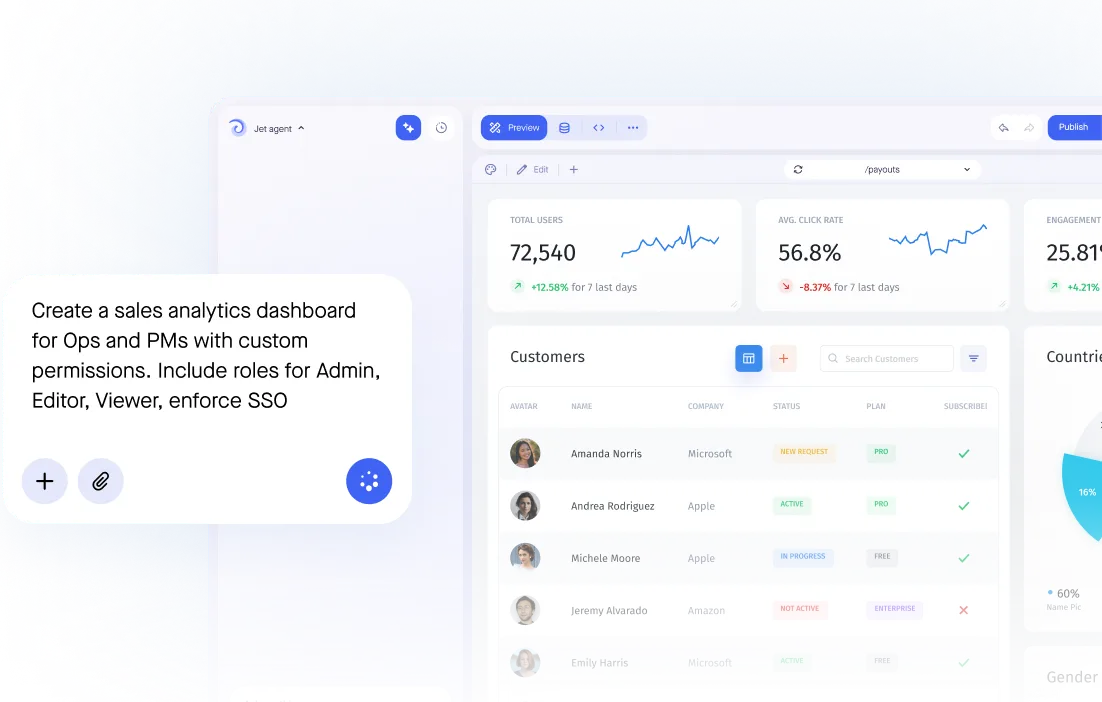
Using a structured template transforms fleet management into a proactive operation. Ready to build yours? Generate your fleet management app with Jet Admin's AI-powered no-code app builder - connect your existing data, customize the interface, and publish.
Why use this fleet management template
Manual tracking creates compounding problems. When vehicle data lives across multiple spreadsheets, maintenance gets missed, driver certifications expire without notice, and cost reporting requires hours of manual consolidation. Databases enforce data types to prevent entry errors, while spreadsheets leave room for inconsistencies that multiply over time. A centralized template eliminates duplicate records and gives every stakeholder - from fleet managers to maintenance technicians - access to accurate, current information.
Real-time visibility into fleet health changes how you operate. Instead of checking spreadsheets to find which vehicles are due for service or which drivers are available, the template surfaces this through a live dashboard. Maintenance alerts flag upcoming service dates and mileage thresholds before they become emergencies. Performance metrics help identify trends and improve fleet operations - you can spot underutilized vehicles, track cost per mile, and monitor driver assignments at a glance. Good fleet management templates provide insights into operational efficiency and cost trends that would take hours to extract from raw data.
Consistency reduces risk. Standardized inspection records document dates, checklist items, and inspector names the same way every time. Uniform maintenance procedures mean every vehicle follows the same preventive schedule. Documenting inspections provides proof of compliance during audits, and consistent cost reporting across your fleet makes budgeting and total cost analysis reliable rather than approximate. Inspection and incident logs create a complete history for each vehicle, supporting warranty claims, resale evaluations, and regulatory reviews.
Collaboration becomes practical. Drivers submit pre-trip inspection forms from mobile devices. Maintenance teams receive work order notifications triggered by failed inspection items. Fleet managers monitor everything from a centralized dashboard. A fleet management template should include driver management to ensure safety protocols are followed across teams - and this one does, with shared access to the records each role needs.
Repetitive tasks disappear. Templates can include automated reminders for maintenance tasks, reducing the administrative overhead of chasing down certification renewals, insurance expirations, or scheduled service dates. Less manual data entry means fewer errors and more time for decision making that actually improves your fleet's performance. According to industry data, approximately 35% of fleets using GPS fleet tracking technology report improved operational efficiency, while 30% report reduced maintenance costs - benefits driven by the same centralized visibility and automation this template provides.
Template features
Fleet dashboard and vehicle overview
The fleet dashboard centralizes the metrics that matter: active driver assignments, vehicles due for maintenance, overdue tasks, mileage tracking totals, and cost summaries. Filter vehicles by status - in service, under maintenance, or idle - to get an immediate read on fleet health. Chart widgets display trends like maintenance expenses over time or utilization rates across your fleet, supporting both real-time monitoring and historical analysis. This is where managing your fleet shifts from reactive to informed.
Vehicle and driver records management
Every vehicle gets a comprehensive profile: make, model, VIN, registration, insurance details, fuel type, capacity, odometer readings, purchase date, and warranty information. Key elements of a fleet management template include vehicle information and maintenance logs - both are linked here so you can trace a vehicle's complete history from a single record. Driver profiles store license type, expiry dates, certifications, contact details, assignment history, and safety records. Attach scans of documents directly to records for easy access during audits or reviews.
Assignment and trip tracking
Assignment workflows connect a specific driver to a specific vehicle for a defined route or task, with start and end times, purpose, and route details. Trip logging captures mileage, fuel consumption, duration, and stops. A mileage log tracks vehicle ID, odometer reading, and fuel volume for each trip. Attach receipts or photos - fuel stops, tolls, delivery confirmations. Trip history per vehicle and per driver feeds directly into utilization and cost reporting.
Maintenance scheduling and tracking
Preventive maintenance reduces unexpected breakdowns by 30%, and timely maintenance decreases emergency repairs by 25%. This template supports preventive maintenance schedules based on time intervals, mileage thresholds, or usage patterns. Each maintenance event records cost, service provider, parts used, and completion status. A detailed maintenance log should include vehicle ID and service date - here, it also links to the triggering inspection or alert. A well-structured maintenance log can extend vehicle lifespan by 15%, and regular updates prevent missed maintenance and costly breakdowns. Define recurring task templates once and apply them across your entire fleet.
Inspection and incident forms
Mobile-friendly checklists handle pre-trip and periodic inspections with pass/fail items, photo attachments, and digital signatures. Failed items can trigger follow-up work orders or immediate notifications to maintenance staff. Incident reporting captures description, severity, date/time, involved vehicle and driver, and supporting photos. Every submission is timestamped and logged, building the audit trail that compliance requires. Automated reminders improve maintenance compliance by 40% when paired with scheduled inspection workflows.
Document and compliance alerts
Each vehicle and driver record carries associated documents: insurance policies, registration certificates, driver licenses, and safety certifications. The template tracks expiry dates and can run scheduled checks to generate reminders before deadlines arrive. Monitoring regulatory compliance helps ensure vehicles remain legally compliant - and organized records help verify deductible expenses for tax purposes. Role-based visibility controls which users can access sensitive documents, keeping security tight while keeping compliance accessible.
Cost and utilization reporting
Expense tracking supports budgeting and total cost analysis across your fleet. Track fuel costs, maintenance expenses, parts, and vendor invoices at the vehicle level. Fuel tracking in a template identifies trends and opportunities to reduce costs - tracking fuel consumption helps identify inefficiencies in 20% of vehicles. Utilization metrics show miles driven, hours in use versus idle, and cost per mile. Export reports as CSV or PDF for financial review. Customizable dashboards let you break down costs by category, vehicle, driver, or time period, giving you the data to make informed decisions about repairs, replacements, and route efficiency.
Role-based access and permissions
Define distinct user roles - fleet manager, driver, maintenance technician, compliance officer - each with appropriate data access. Drivers see their own assignments and inspection forms but not financial data. Maintenance staff access work orders and vehicle records. Fleet managers get full visibility across operations. Location-based or department-level permissions add another layer of control for larger organizations. Activity logs maintain an audit trail of who changed what and when, ensuring accountability and security across users.
Who is this fleet management template for?
- Fleet managers overseeing entire operations need dashboards that surface what matters: vehicles due for service, cost trends, driver availability, and utilization rates. This template centralizes the scheduling, tracking, and reporting that keeps a fleet running - replacing the patchwork of spreadsheets and tools that most fleet managers currently navigate.
- Transportation and delivery companies managing multiple vehicles running routes daily need reliable trip tracking, driver assignments, route documentation, and fuel cost monitoring. Assign drivers and vehicles for shipments, track delays and incidents, and maintain the compliance documentation that regulators require.
- Field service teams coordinating technicians with service vehicles need to assign tasks, track vehicle condition, maintain inspections, and log mileage and fuel. Mobile-friendly forms let technicians complete inspections and incident reports in the field, ensuring vehicle readiness and safety without returning to the office.
- Logistics and freight operations focused on maximizing truck and trailer utilization benefit from cost-per-mile analysis, idle time tracking, and preventive maintenance scheduling that reduces downtime. Templates can track maintenance, fuel usage, and service timelines across large fleets where even small efficiency gains translate to significant money saved.
- Maintenance and repair teams servicing fleets need a unified view of incoming work orders, inspection findings, parts history, and scheduled preventive service. This template organizes that workflow from inspection trigger through completion and cost logging.
- Small to medium businesses replacing manual tracking - companies with 5–50 vehicles currently using Excel or Google Sheets to manage their fleet. Free fleet management templates help organize vehicle operations, and this template offers a clear upgrade path: centralized data, automation, and dashboards without requiring a development team. Google Sheets allows real-time collaboration on fleet management templates, and Jet Admin can connect directly to those existing spreadsheets as a data source.
How to set up your fleet management template
- Generate your fleet management app Open Jet Admin and use the AI-powered no-code app builder to create your fleet management app. Select the fleet management template to get a scaffolded layout with modules for vehicles, drivers, assignments, maintenance, inspections, and costs. Databases automate administrative tasks using AI technology, and the generated app gives you a working structure to customize rather than building from scratch.
- Connect your data sources Link your existing data through native integrations - PostgreSQL, MySQL, Supabase, Airtable, or Google Sheets all connect directly. If you're starting fresh, use the template's sample data to explore the structure, then replace it with your actual records. For telematics, mapping, or fuel card systems, connect via REST or GraphQL APIs. Excel templates can automate calculations for mileage and fuel expenses, and importing that existing data gives you a running start.
- Map and configure your fields Customize vehicle attributes - type, capacity, fuel model, odometer - and driver fields like license type, certifications, and photo. Define maintenance categories, cost tracking fields, and vehicle-type-specific attributes (refrigerated van versus box truck) that feed into differentiated maintenance schedules. Configure status fields and derived usage metrics to match how your fleet actually operates.
- Design your interface and dashboards Use Jet Admin's Visual Builder to drag and drop components: tables, forms, charts, and record detail views. Build a fleet overview dashboard showing key KPIs - vehicles due for maintenance, cost per vehicle, active driver assignments. Create detail pages for individual vehicles and drivers. Design inspection and trip forms optimized for mobile so drivers and technicians can submit data in the field.
- Set up workflows and automation Configure automated alerts for upcoming maintenance, document expiry, and license renewals. Set up workflow triggers - for example, a failed inspection item automatically generates a work order. Schedule daily or weekly checks that scan for upcoming expirations and send reminders via email or Slack notifications. Map telematics fault codes into alert workflows where your data sources support it.
- Configure user access and permissions Assign roles to fleet managers, drivers, and maintenance staff. Set read, edit, and delete permissions per record type - drivers fill out forms and view their own assignments; managers access cost data and fleet-wide reports. Apply location or department-level restrictions for larger operations. Enable secure login and configure activity logs for a full audit trail.
- Test, refine, and publish Run through core scenarios with sample data: simulate a maintenance due date, create a trip assignment, submit an inspection form from mobile, and verify that alerts fire correctly. Get feedback from the people who will use it daily - maintenance staff, drivers, managers. Once validated, publish the app and onboard your team.
Start building your customized fleet management solution with Jet Admin - connect your data, configure your workflows, and publish an app that fits exactly how your fleet runs.
Frequently asked questions
What is a fleet management template?
A fleet management template is a pre-built application structure that provides modules to manage vehicles, drivers, assignments, trips, maintenance, inspections, incidents, documents, and costs in one centralized system. With Jet Admin, you get a scaffolded set of tables, forms, dashboards, and workflows that you customize to your data and operational needs. Fleet management templates aid in centralizing data for effective operations rather than scattering it across disconnected tools.
Can vehicles and drivers be assigned to specific routes or tasks?
Yes. The template includes assignment records that map drivers to vehicles for specific tasks or routes. You can define route details - start point, end point, stops - schedule the assignment with start and end times, and log trip data including mileage and fuel consumption. When integrated with mapping or telematics APIs, route visualization and GPS data further enhance assignment tracking.
Can maintenance schedules and inspections be tracked automatically?
Yes. Preventive maintenance schedules can be configured using rules based on mileage thresholds, hours of operation, or time intervals. Maintenance schedules list upcoming service dates and mileage thresholds for each vehicle. Inspections include mobile-friendly checklists with pass/fail items and photo attachments. Failed items can trigger workflows such as automatic work order generation. Automated reminders keep schedules on track - and accurate maintenance records support warranty claims and resale evaluations.
Can document expiry alerts be automated for compliance?
Yes. Driver licenses, insurance policies, vehicle registrations, and safety certifications can each have expiry dates stored in the template. Jet Admin can run scheduled jobs to check for upcoming expirations and generate reminders via email or in-app notifications before deadlines pass. This keeps your fleet legally compliant and creates an accessible record for audits.
Can mileage and fuel costs be reported by vehicle?
Yes. Mileage can be logged manually through trip records or pulled from connected telematics systems. Fuel costs and usage receipts attach to trip or vehicle records. Reports and dashboards show cost per mile, fuel consumption variance across vehicles or drivers, and utilization metrics. Templates often include built-in formulas for automated calculations, making per-vehicle cost analysis straightforward.
Can telematics data be integrated with the template?
Yes. Jet Admin supports connecting to REST APIs or GraphQL endpoints, so telematics systems that expose data via API can feed in live or near-real-time data: odometer readings, fault codes, GPS location, and route tracking. External mapping services and GPS providers can also integrate to visualize trips or vehicle positions on a map. These are API-based connections rather than native integrations.
What integrations are available for fleet management?
Native data connections include PostgreSQL, MySQL, Supabase, Airtable, and Google Sheets. For external systems - telematics providers, mapping services, fuel card platforms, or ERP systems - integrations are available through REST or GraphQL APIs. Notification channels like Gmail and Slack can be configured for workflow alerts. Jet Admin supports both scheduled and event-based automation to connect your fleet data with external systems and alert channels.

.svg)





Use Cases
Categories
Features
Similar templates




Connect & sync your data with 30+ data sourse’s


Build frontend Apps 10x faster


Frequently asked questions
Native data connections include PostgreSQL, MySQL, Supabase, Airtable, and Google Sheets. For external systems - telematics providers, mapping services, fuel card platforms, or ERP systems - integrations are available through REST or GraphQL APIs. Notification channels like Gmail and Slack can be configured for workflow alerts. Jet Admin supports both scheduled and event-based automation to connect your fleet data with external systems and alert channels.
Yes. Jet Admin supports connecting to REST APIs or GraphQL endpoints, so telematics systems that expose data via API can feed in live or near-real-time data: odometer readings, fault codes, GPS location, and route tracking. External mapping services and GPS providers can also integrate to visualize trips or vehicle positions on a map. These are API-based connections rather than native integrations.
Yes. Mileage can be logged manually through trip records or pulled from connected telematics systems. Fuel costs and usage receipts attach to trip or vehicle records. Reports and dashboards show cost per mile, fuel consumption variance across vehicles or drivers, and utilization metrics. Templates often include built-in formulas for automated calculations, making per-vehicle cost analysis straightforward.
Yes. Driver licenses, insurance policies, vehicle registrations, and safety certifications can each have expiry dates stored in the template. Jet Admin can run scheduled jobs to check for upcoming expirations and generate reminders via email or in-app notifications before deadlines pass. This keeps your fleet legally compliant and creates an accessible record for audits.
Yes. Preventive maintenance schedules can be configured using rules based on mileage thresholds, hours of operation, or time intervals. Maintenance schedules list upcoming service dates and mileage thresholds for each vehicle. Inspections include mobile-friendly checklists with pass/fail items and photo attachments. Failed items can trigger workflows such as automatic work order generation. Automated reminders keep schedules on track - and accurate maintenance records support warranty claims and resale evaluations.
Yes. The template includes assignment records that map drivers to vehicles for specific tasks or routes. You can define route details - start point, end point, stops - schedule the assignment with start and end times, and log trip data including mileage and fuel consumption. When integrated with mapping or telematics APIs, route visualization and GPS data further enhance assignment tracking.
A fleet management template is a pre-built application structure that provides modules to manage vehicles, drivers, assignments, trips, maintenance, inspections, incidents, documents, and costs in one centralized system. With Jet Admin, you get a scaffolded set of tables, forms, dashboards, and workflows that you customize to your data and operational needs. Fleet management templates aid in centralizing data for effective operations rather than scattering it across disconnected tools.