Event Management
App
Event Management
Overview
An effective event management template should centralize logistics and planning tasks-bringing every record, workflow, and stakeholder view into one flexible workspace instead of scattering them across spreadsheets, email threads, and disconnected tools. This event management template is a pre-structured framework that connects your core event data (events, sessions, speakers, venues, attendees, registrations, vendors, budgets, and tasks) so your entire team operates from a single source of truth.
The problem it solves is straightforward. Event planning without a centralized system means fragmented data, manual coordination that eats into productive hours, and zero real-time visibility into registration numbers, budget spend, or task status. According to Zoho's research, teams waste roughly 45% of their time switching between different software platforms rather than focusing on execution. Common event management templates include budgets, timelines, and risk management-but when these live in separate files, consistency breaks down and details fall through the cracks.
This template brings everything together: dashboards that surface real time updates on registrations and spending, automated workflows for confirmations and check ins, directories for speakers and attendees, and task timelines that keep deadlines visible. It is fully customizable-you can adapt fields, views, and workflows to fit corporate conferences, trade shows, association meetings, or internal training events.
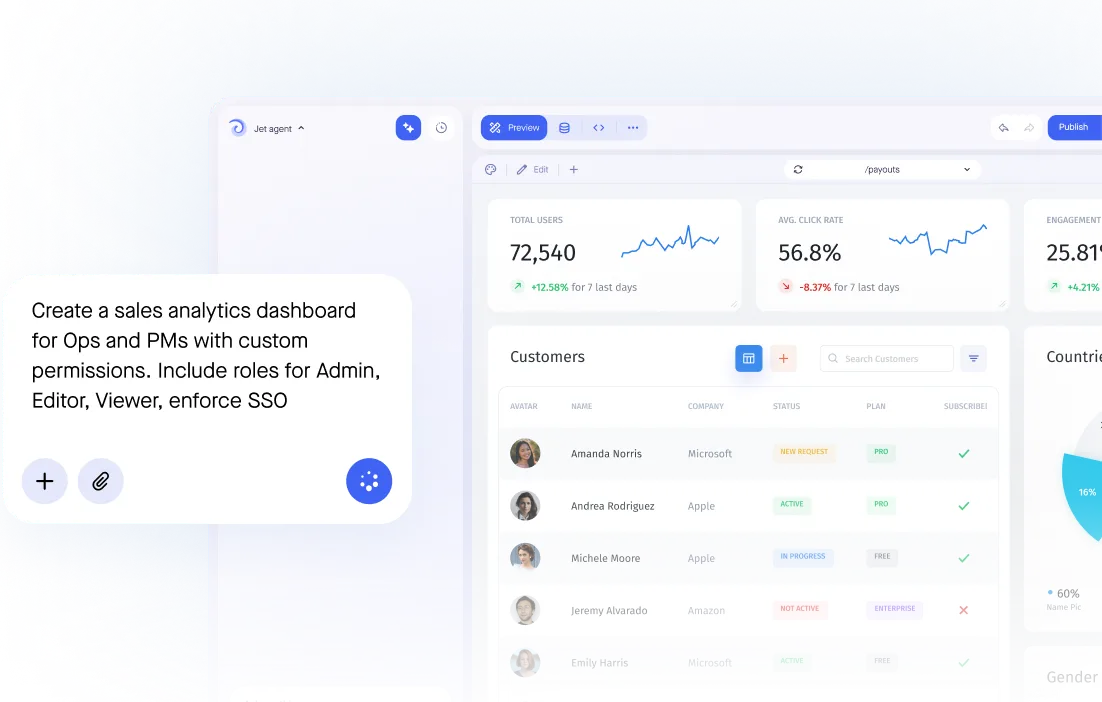
With Jet Admin's AI-powered no-code platform, you can generate a customized event management app built on this template in minutes. Connect your existing data, configure the interface, set permissions, and publish-no engineering required.
Why use this event management template
Event planners know the pain: your guest lists live in one spreadsheet, your event budget template sits in another, vendor contracts are buried in email, and speaker confirmations require manual follow-up. Every upcoming event starts with the same scramble to pull information together. This template replaces that fragmented planning process with a connected system where every piece of event data links to the rest.
- Eliminate scattered spreadsheets and email chains. Instead of toggling between Google Sheets, Excel files, calendar apps, and email threads, you manage events, attendees, speakers, venues, and vendors in one place. Event planning templates help manage budgets, schedules, and vendors from a single view-no more version conflicts or outdated documents.
- Gain real-time visibility into what matters. Track registration numbers, task progress, and budget spend as they happen. Budget dashboards provide real-time snapshots of spending, so you catch variances before they become overruns. Event planners use templates to forecast and control expenses with actual numbers, not estimates assembled after the fact.
- Standardize your planning process across events. Whether you're running your first event or your fiftieth, the same structure applies. Templates can include sections for timelines, budgets, and vendor details that your team reuses and refines. This consistency means fewer surprises and a smoother path to each successful event.
- Reduce manual work with automation. Event planning templates can automate task assignments and updates. Instead of manually sending confirmation emails, check-in reminders, or status updates, configure workflows that handle these steps. Your team focuses on strategy rather than administration.
- Improve collaboration across teams and stakeholders. Shared access means organizers, staff, speakers, and vendors all see the same information. You assign tasks with due dates, track who owns what, and keep every stakeholder aligned without scheduling extra coordination meetings.
- Better coordination with vendors and sponsors. Centralized vendor management tracks contracts and payment schedules in one view. No more digging through folders to find a catering agreement or confirm a sponsorship commitment.
Template features
Event Dashboard
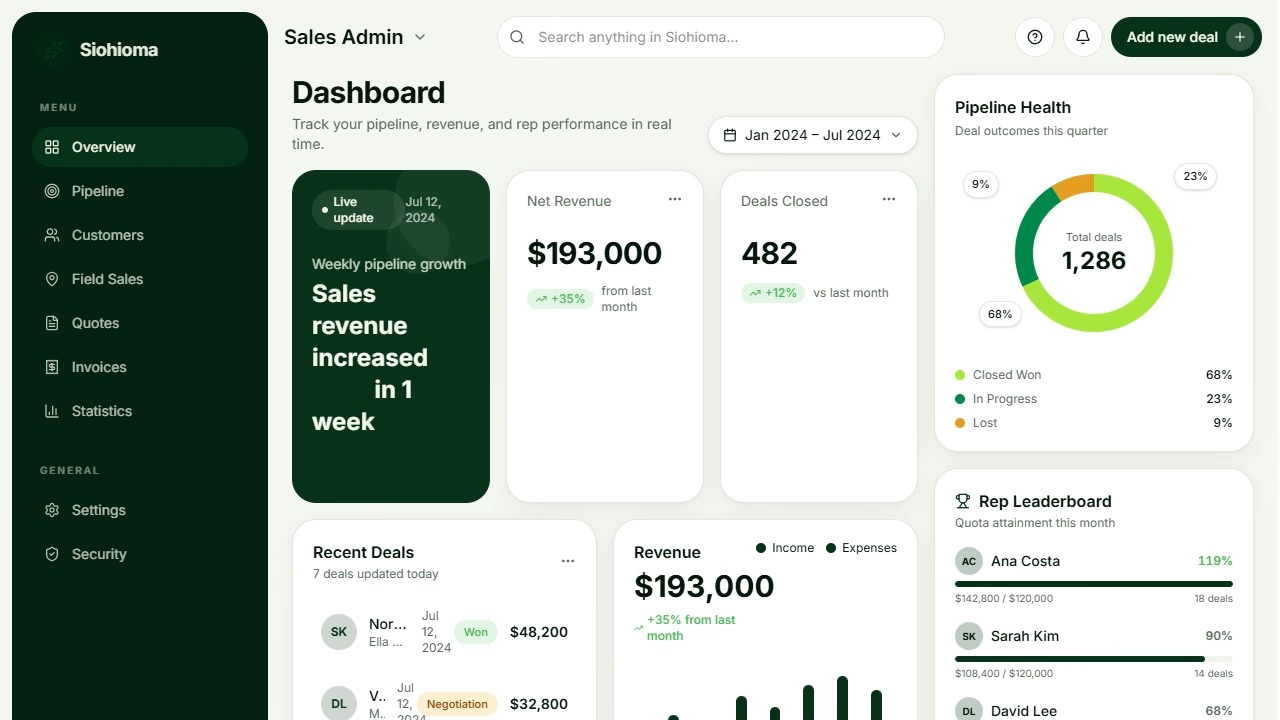
Your event dashboard delivers a real-time overview of event metrics: registration counts, ticket sales by type, budget versus actuals, upcoming deadlines, and overdue event tasks. Instead of compiling reports manually, you open a single screen that visualizes everything. Key performance indicators update as data flows in, helping you make smarter decisions about resource allocation, promotions, and staffing for any upcoming event.
Registration Management
Custom registration forms collect the attendee information you need-names, contact details, dietary requirements, session preferences, ticket type. Event registration tracking templates log attendees and payments as registrations come in. You define capacity limits, manage multiple ticket categories, and monitor RSVP statuses. Guest list managers track attendee information and RSVP statuses without manual data entry, and the data feeds directly into your dashboard and attendee directories.
Agenda and Session Management
Build your event schedule with a drag-and-drop session builder. Event schedule templates provide hour-by-hour activity breakdowns, so every session has assigned speakers, a designated venue or room, start and end times, and clear transitions. Day-of event itineraries detail setups, speaker transitions, and event timings. Event schedules help ensure timely transitions and organization across single-day conferences or multi-day trade shows. You can manage conflicts, track room availability, and share the published schedule to guide attendees through your agenda.
Speaker and Attendee Directories
Maintain comprehensive directories with profiles, roles, bios, and communication preferences. Filter by category-VIPs, media, sponsors, key contacts-and access any record instantly. Speaker profiles link directly to their assigned sessions, so you always know who's presenting where. Attendee records connect to registration data, check-in status, and feedback responses, giving you a complete picture of each participant.
Task Timeline and Project Tracking
Event timelines map critical milestones and deadlines: venue booking confirmation, speaker contracts, catering orders, marketing launches. A detailed task checklist categorizes planning phases and execution activities. You assign tasks to team members with due dates and status tracking, monitor progress against your timeline template, and receive alerts when deadlines approach. Event checklist templates track planning tasks from start to finish, keeping your entire team aligned on what needs to happen and when.
Check-in and Attendance Tracking
Replace paper sign-in sheets with digital check ins. Configure QR-based or list-based check-in processes that update attendance in real time. Event staffing plans track roles and shifts for events, so you know who's managing each check-in point. Real-time attendance reporting during the event helps you understand session popularity and adjust logistics on the fly. Badge management features let you organize attendee credentials before event day.
Vendor and Budget Management
Vendor management templates track contracts and performance details for every supplier. You coordinate caterers, AV providers, decorators, and sponsors from a single view. Event budget templates estimate and track every expense-labor, materials, overhead costs, and sponsorship income. Templates can help prevent budget overruns by tracking variances between estimated and actual costs, so you stay in control of spending throughout the planning process.
Automated Reports and Analytics
Post-event evaluations gather feedback and assess outcomes without manual compilation. Automated reports pull attendance metrics by session, revenue summaries, and satisfaction scores into formatted views. You gather feedback through linked survey forms and compile results alongside attendance data for a complete post event evaluation. These insights feed directly into planning for your next event, helping you identify what worked and what needs adjustment.
Who is this event management template for?
- Corporate event planning teams managing annual conferences, stakeholder meetings, and product launches. You need to coordinate speakers, track hundreds of attendees, manage venue logistics, and report on event performance to leadership-all while keeping the planning process repeatable across events.
- Marketing teams running webinars, product announcements, and customer engagement events. Your focus is on registration tracking, target audience segmentation, promotional campaigns, and post-event follow-up. This template connects your event details to attendee data so you can measure results and plan your next event based on real numbers.
- Professional associations and non-profits organizing annual meetings, certification programs, and member events. Operating on tight budgets with small teams, you need consistency and a reusable structure. An event budget template paired with automated registration keeps your operations lean and your members engaged.
- Conference and trade show organizers handling multi-day, multi-track events with dozens of speakers, exhibitors, and sponsors. Session management, vendor coordination, and large-scale attendee registration are your daily challenges. This template scales to handle the complexity without losing track of event details.
- Venue managers tracking multiple event bookings, client requirements, venue availability, and setup logistics. You need a calendar view of scheduled events, linked vendor and client records, and clear visibility into each booking's status and resource needs.
- Internal operations and HR teams coordinating company-wide events, training sessions, and team building activities. Even smaller-scale events require smooth coordination-this template helps you organize logistics, track attendance, and manage internal vendors without over-engineering the process.
How to set up your event management template
- Select the event management template from Jet Admin's template library. Browse available event planning templates and choose the one that matches your event type. The template comes pre-configured with records for events, sessions, speakers, venues, attendees, registrations, vendors, tasks, and budgets-ready to customize.
- Connect your existing data sources. Link your current data from Google Sheets, Airtable, PostgreSQL, Supabase, MySQL, or HubSpot using Jet Admin's native connectors. If your registration data or contact lists already live in these systems, connecting them means you avoid duplicate data entry and keep your existing workflows intact.
- Map your event data fields. Align your source data to the template's records: events, sessions, speakers, venues, attendees, and registrations. Define which columns or fields correspond to names, dates, ticket types, budget categories, and vendor details. This ensures your data populates the right views and dashboards from the start.
- Customize the interface with your branding and layout. Adjust forms, schedule views, and dashboard components to match your organization's needs. Add or remove fields, configure the format of your registration form, and arrange your event dashboard to surface the metrics that matter most. The template is fully customizable-adapt it to your event's specific requirements.
- Configure user permissions for staff, organizers, and attendee access. Define who can view, edit, or manage each section. Organizers get full access; event staff see tasks and check-in views; speakers access their session details and profiles; attendees see the published schedule and event updates. Setting permissions ensures the right people have the right level of access.
- Set up automated workflows for confirmations, notifications, and check-in processes. Configure email confirmations triggered by new registrations via Gmail integration. Build reminder workflows for approaching deadlines, session start times, or vendor deliverables. Set up your check-in process so attendance updates automatically when attendees arrive.
- Test registration flow, check-in functionality, and reporting before publishing. Run through the full attendee journey: submit a test registration, verify the confirmation email arrives, test the check-in process, and confirm that dashboard metrics and reports update correctly. Once validated, publish your event management app and share access with your team.
Ready to stay organized and plan your next successful event? Get started with Jet Admin's AI-powered no-code platform and generate your event management app today.
Frequently asked questions
What is an event management template?
An event management template is a pre-built structure that combines records (events, speakers, attendees, vendors, venues), workflows (automated confirmations, task reminders), dashboards, and user permissions into a connected system for managing event planning. It replaces fragmented spreadsheets and documents with a centralized operational framework. Key components of event management templates include budgeting and timelines, attendee and vendor management, and task tracking-all linked together so updates in one area reflect across the entire plan.
Can it handle registrations and check-in?
Yes. The template includes custom registration forms that collect attendee data, manage ticket types, and track capacity. Event registration tracking templates log attendees and payments as they register. For check-in, you configure digital or QR-based processes that update attendance in real time-no paper lists or manual counting. Event schedule templates help manage hour-by-hour activities on event day, and check-in data feeds directly into your attendance reports.
Can I manage speakers and sessions?
Yes. The template includes speaker directories with profiles, bios, and session assignments, plus an agenda builder for scheduling sessions with room allocations and time slots. You track speaker confirmation status, manage availability conflicts, and publish the finalized event schedule for your team and attendees.
Can attendees have a portal?
Yes. You can configure attendee-facing views that display the published schedule, speaker information, venue maps, and event updates. Permissions control what attendees can see versus what's restricted to organizers and staff. The portal helps guide attendees through your event's agenda and resources.
Can confirmations be automated?
Yes. You set up workflow automations that trigger email notifications through Gmail integration when a new registration is submitted, when a session reminder is due, or when event details change. This eliminates manual follow-up and ensures attendees and speakers receive timely updates throughout the planning process.
Can I connect a ticketing system?
Yes. Jet Admin supports API integrations with ticketing and payment platforms, allowing you to connect external tools like Stripe or dedicated ticketing services. Vendor management templates help coordinate multiple suppliers' details, and the same integration approach applies to connecting payment gateways, calendar tools, and CRM systems for seamless data flow between your event management app and existing tools.

.svg)



Use Cases
Categories
Features
Similar templates




Connect & sync your data with 30+ data sourse’s


Build frontend Apps 10x faster


Frequently asked questions
Yes. Jet Admin supports API integrations with ticketing and payment platforms, allowing you to connect external tools like Stripe or dedicated ticketing services. Vendor management templates help coordinate multiple suppliers' details, and the same integration approach applies to connecting payment gateways, calendar tools, and CRM systems for seamless data flow between your event management app and existing tools.
Yes. You set up workflow automations that trigger email notifications through Gmail integration when a new registration is submitted, when a session reminder is due, or when event details change. This eliminates manual follow-up and ensures attendees and speakers receive timely updates throughout the planning process.
Yes. You can configure attendee-facing views that display the published schedule, speaker information, venue maps, and event updates. Permissions control what attendees can see versus what's restricted to organizers and staff. The portal helps guide attendees through your event's agenda and resources.
Yes. The template includes speaker directories with profiles, bios, and session assignments, plus an agenda builder for scheduling sessions with room allocations and time slots. You track speaker confirmation status, manage availability conflicts, and publish the finalized event schedule for your team and attendees.
Yes. The template includes custom registration forms that collect attendee data, manage ticket types, and track capacity. Event registration tracking templates log attendees and payments as they register. For check-in, you configure digital or QR-based processes that update attendance in real time-no paper lists or manual counting. Event schedule templates help manage hour-by-hour activities on event day, and check-in data feeds directly into your attendance reports.
An event management template is a pre-built structure that combines records (events, speakers, attendees, vendors, venues), workflows (automated confirmations, task reminders), dashboards, and user permissions into a connected system for managing event planning. It replaces fragmented spreadsheets and documents with a centralized operational framework. Key components of event management templates include budgeting and timelines, attendee and vendor management, and task tracking-all linked together so updates in one area reflect across the entire plan.