Sales Pipeline
App
Sales Pipeline
Overview
A sales pipeline template gives your sales team a structured, visual representation of every deal moving from first contact to closed deal-without forcing you into a rigid CRM that takes months to configure. Instead of scattered spreadsheets and guesswork, you get a centralized app that tracks sales leads, manages pipeline stages, and helps you forecast revenue based on deal probabilities and expected close dates.
Most sales teams hit the same wall: deals slip through the cracks, follow-ups get missed, and forecasting becomes a best-guess exercise. A sales pipeline template solves this by organizing every sales opportunity into clear, standardized stages-so your team knows exactly where each deal stands, what action comes next, and how much incoming revenue to expect.
With Jet Admin, you can start from a ready-to-use sales pipeline template and customize it into a fully working app that connects to your existing data. Whether your pipeline data lives in a Postgres database, Google Sheets, or a REST API, you can build a tailored pipeline management tool without writing code or waiting on engineering. It's a flexible starting point-not a one-size-fits-all system-designed to reflect your own sales process.
Start with the free sales pipeline template and have a working app connected to your data in minutes.
Why use this sales pipeline template
Sales teams that rely on spreadsheets to manage their pipeline eventually run into the same problems. Deal information is scattered across emails, notes, and multiple spreadsheet tabs. No one is sure which version is current. Follow-ups fall through the cracks because there are no automated reminders-and research suggests nearly 90% of spreadsheets contain significant errors, which means your forecasts may be built on flawed data.
This sales pipeline template addresses those problems directly:
- Scattered deal information becomes centralized. Instead of hunting across tools, every deal record-value, stage, contact, close date-lives in one place. Sales pipeline management helps track leads and opportunities effectively, and this template provides full visibility into every deal.
- Missed follow-ups become tracked action items. Templates reduce missed follow-ups by tracking action items in one place. Automated reminders ensure sales reps act before deals go cold. Sales teams should prioritize high-value opportunities to optimize their efforts, and a centralized view makes that possible.
- Guesswork forecasting becomes data-driven. Sales pipeline templates improve forecasting accuracy and resource planning. The expected revenue from a deal can be calculated using deal value and win probability-automatically, without manual formula work.
- Inconsistent processes become standardized. A good sales pipeline template is tailored to reflect the specific sales process of a business, and templates help maintain a consistent sales process across teams. New sales reps follow the same stages, the same criteria, and the same workflow.
- Administrative overhead drops. Sales pipeline templates can automate repetitive tasks and provide predictive insights, freeing your team to focus on building relationships with prospective customers rather than updating spreadsheets.
Effective pipeline management provides visibility into which sales representatives are closing deals and where bottlenecks exist. When your sales team members can see every deal's progress in real time, coordination improves and more deals reach the finish line. Regularly updating the sales pipeline is critical for reflecting current opportunities and actions taken-and a purpose-built app makes those updates fast and intuitive, unlike a static spreadsheet.
Template features
Deal tracking dashboard
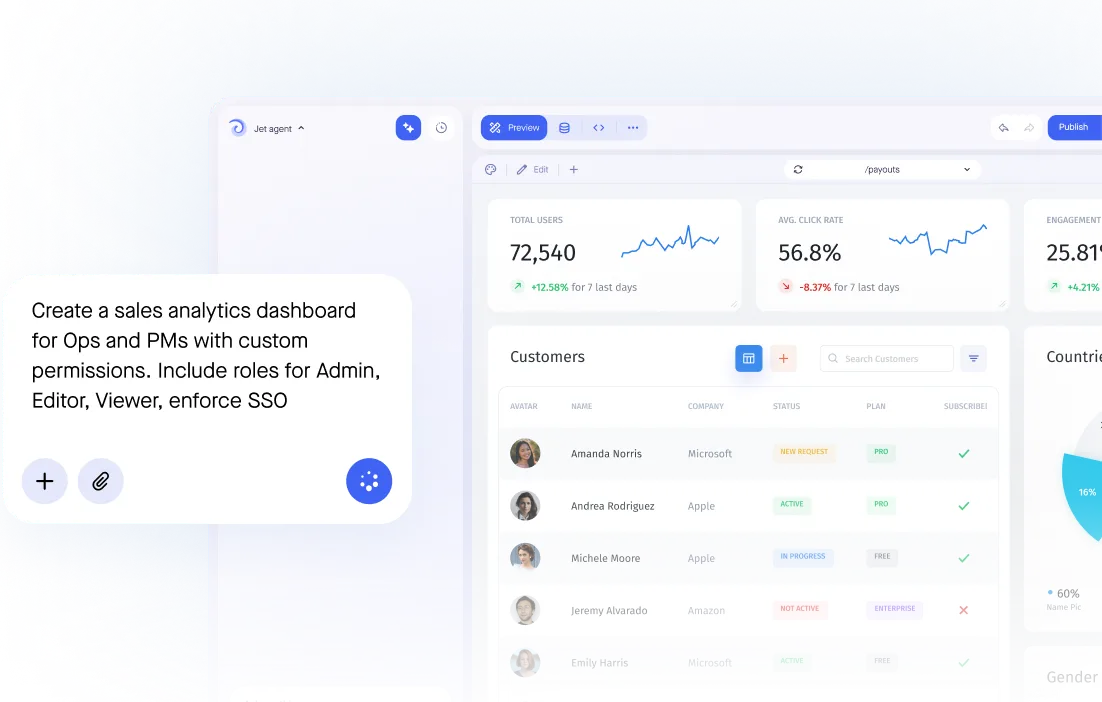
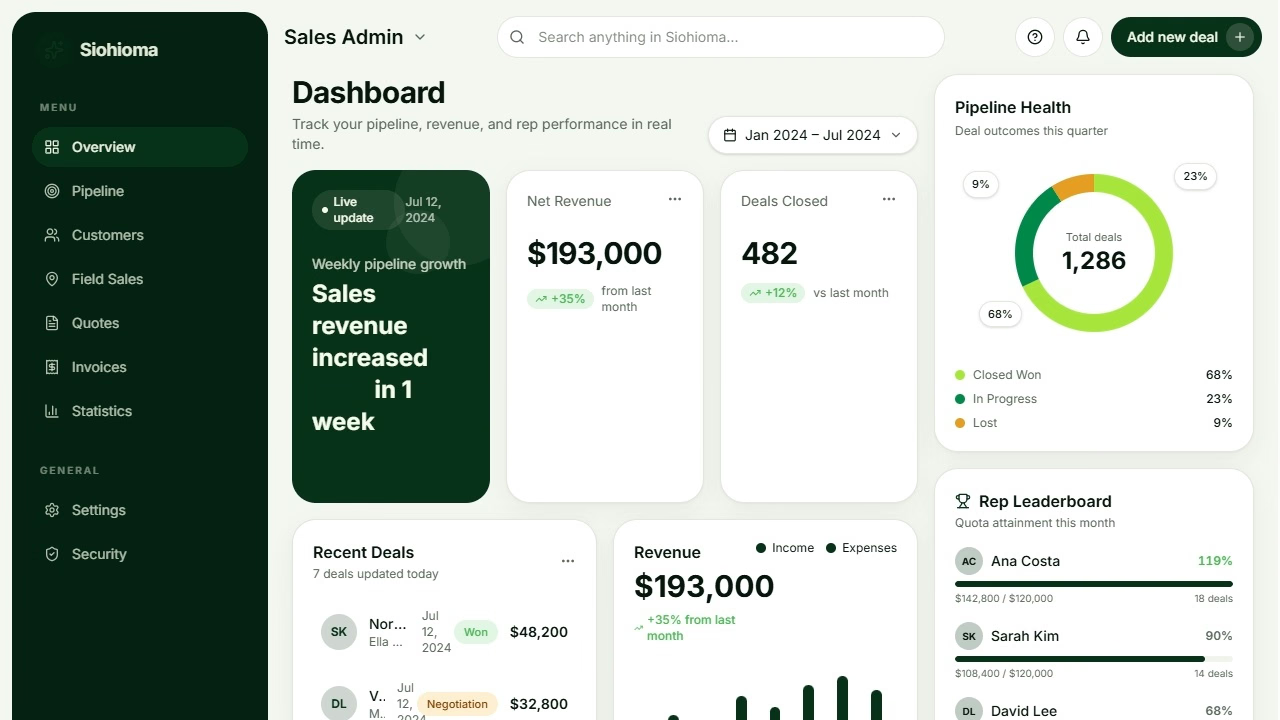
Get a board view of all active sales opportunities with their current status, deal size, owner, and expected close date. The dashboard gives sales managers a visual overview of pipeline health, helping them spot stalled deals and prioritize where to focus. A sales pipeline template visualizes all sales stages, so nothing hides in a forgotten spreadsheet row. Sales pipeline templates provide a visual representation of sales processes, making it easy to assess your pipeline at a glance.
Pipeline stage management
Define and customize pipeline stages that reflect your actual sales process and buyer's journey. A sales pipeline typically includes seven stages, and standard stages in a sales pipeline include prospecting, qualification, proposal, and negotiation. But every business is different-customize pipeline stages to fit your team's workflow. Stages should reflect your sales process and buyer's journey, and each stage means a specific set of criteria must be met before a deal advances. Sales pipeline stages should have clear entry and exit criteria to ensure consistency in moving opportunities forward. Clear, standardized stages help manage accountability among sales teams.
Revenue forecasting
The template calculates projected revenue automatically using deal values, win probability percentages, and expected close dates. This replaces the fragile spreadsheet formulas that break when someone accidentally edits a cell. A sales pipeline template helps forecast revenue based on deal probabilities, enabling more accurate revenue forecasting for businesses. Sales pipeline management includes tracking deal sizes and probabilities, giving sales leaders the accurate forecasting they need for revenue planning and board reporting.
Contact and account management
Each deal record links to its associated contacts, accounts, and relevant customer data. A well-structured sales pipeline includes core data like deal size and lead source. This centralized account management approach means your sales representative doesn't need to switch between tools to find a prospect's history or company details.
Activity tracking
Log calls, meetings, emails, and follow-up tasks directly against deal records. Set automated reminders so no follow up gets missed. Templates help track leads, finances, and actions related to sales-keeping every interaction in context. This is especially valuable for teams managing a long sales cycle where multiple touchpoints happen over weeks or months.
Team collaboration tools
Assign deals to specific sales reps, configure role-based access so managers see the full pipeline while reps see their own deals, and track progress across the team. Sales pipeline templates improve team alignment on priorities. With configurable permissions, you control who can view, edit, or manage pipeline data without compromising security.
Reporting and analytics
Track sales performance metrics including conversion rates between pipeline stages, average deal size, sales velocity, and win/loss ratios. Monitoring conversion rates between stages helps identify bottlenecks-if deals consistently stall at the proposal stage, you know where to focus coaching. Effective sales pipeline management minimizes loss and maximizes revenue by surfacing these patterns early.
Data integration
Connect your existing databases, spreadsheets, and business tools without migrating data. Sales pipeline templates can integrate data from various sources-whether that's a Postgres or MySQL database, Google Sheets, REST APIs, or other favorite tools your company already uses. Jet Admin supports real-time synchronization, so your pipeline always reflects current data.
Who is this sales pipeline template for?
- Sales managers who need visibility into team performance, deal progression, and pipeline health. If you're spending hours compiling reports from spreadsheets, this template gives you a real-time dashboard that shows which sales reps are hitting their sales goals and where deals are stuck.
- Small to medium sales teams outgrowing spreadsheet-based tracking. Once your team manages more than 20–30 active deals, spreadsheets become a liability. This pipeline template scales with your team without the overhead of a full enterprise CRM.
- Revenue and operations teams building internal sales tools without waiting on IT development. Using Jet Admin's no-code builder, ops leads can create and modify pipeline applications that connect to existing data sources-no engineering tickets required. This works alongside workflow automation to streamline stage transitions and notifications.
- B2B companies with complex sales cycles that involve multiple stakeholders, extended negotiation phases, and systematic deal management. Sales pipelines help track opportunities from first contact to closed deal, and managing sales pipeline stages becomes essential when the sales cycle stretches across months. Templates allow teams to prioritize leads based on probability percentages, helping focus effort where it matters most.
- Organizations integrating sales data with existing systems. If your pipeline data needs to connect to a CRM database, project management tools, or internal reporting systems, this template supports those integrations natively.
- Sales leaders responsible for accurate forecasting for revenue planning, board reporting, and resource allocation. They enable more accurate revenue forecasting for businesses, replacing the fragile spreadsheet models that break under scrutiny.
How to set up your sales pipeline template
Step 1: Start with the sales pipeline template. Select the Sales Pipeline Template. This gives you a pre-built application structure with pipeline views, deal records, and reporting components already configured.
Step 2: Connect your existing data source. Link your data-whether it's a CRM database, spreadsheet, or API. Jet Admin connects to Postgres, MySQL, MongoDB, Supabase, Google Sheets, REST/GraphQL APIs, and more. If you're starting fresh, you can create a new database directly within the platform.
Step 3: Map your deal fields. Configure the data fields that matter to your sales process: opportunity name, deal size, lead status, pipeline stage, contact information, lead source, priority level, expected close date, and assigned sales representative. A well-structured pipeline includes core data like deal size and lead source-make sure these are mapped correctly.
Step 4: Customize pipeline stages to match your sales process. Define the sales stages that reflect how your team actually sells. Common stages are lead generation, qualification, proposal, negotiation, and closing. A sales pipeline template includes stages from lead generation to closing, and stages should reflect your own sales process. Attach probability values to each stage for forecasting, and set clear entry and exit criteria.
Step 5: Configure user permissions and assign team members. Set up role-based access so sales managers get full pipeline visibility while individual reps see their assigned deals. Assign team members to appropriate roles and ensure pipeline data stays secure.
Step 6: Set up automated workflows. Configure automated workflows for stage transitions, follow-up reminders, and notifications. For example, trigger an alert when a deal sits in one stage for more than 14 days, or automatically notify a manager when a high-value deal moves to negotiation.
Step 7: Test and publish. Run the application with sample data to verify that stages, fields, permissions, and automations work correctly. Once validated, publish the app for your team. Jet Admin supports multiple views including board view and table layouts, so your team can work in the format that fits them best.
Get started with your free sales pipeline template and have your team tracking deals in minutes, not weeks.
Frequently asked questions
What is included in the sales pipeline template?
The template includes a deal tracking dashboard, customizable pipeline stages, contact and account records, activity logging, revenue forecasting based on deal probability, team collaboration with role-based permissions, and reporting on conversion rates and sales velocity. Sales pipeline templates provide full visibility into every deal from new leads through to closed deal.
Can I customize the pipeline stages for my specific sales process?
Yes. The template comes with standard stages-prospecting, qualification, proposal, negotiation, and closing-but you can add, remove, or rename stages to match your own sales process. Each stage can have its own probability weighting and entry criteria. A good sales pipeline template is tailored to reflect the specific sales process of a business.
Which data sources can I connect to the sales pipeline template?
Jet Admin supports connections to Postgres, MySQL, MongoDB, Supabase, Google Sheets, REST APIs, GraphQL, and many other sources. You can connect your existing CRM database, spreadsheets, or business tools without migrating data. Sales pipeline templates can integrate data from various sources.
Do I need coding skills to set up and modify the template?
No coding is required. Jet Admin is a no-code app builder-you can customize the interface, configure workflows, and modify data fields visually. For teams that want deeper customization, code-level access and GitHub sync are available, but they're optional.
How does the template handle sales forecasting and reporting?
The template calculates forecast revenue using deal values multiplied by stage-based win probabilities and filters by expected close date. You get reports on sales performance including stage conversion rates, deal velocity, and pipeline value by rep or time period. Templates help forecast revenue based on deal probabilities, enabling more accurate revenue forecasting.
Can multiple team members access and update the same pipeline?
Yes. The template supports multiple users with role-based access controls. Sales reps can update their own deals while sales managers see the full pipeline. All changes sync in real time-no version conflicts like you get with shared spreadsheets. Sales pipeline templates improve team alignment on priorities.
How do I get started with the sales pipeline template?
Select the Sales Pipeline Template, connect your data source, and customize it to match your sales strategy. Most teams have a working application ready within a single session.

.svg)


Use Cases
Categories
Features
Similar templates




Connect & sync your data with 30+ data sourse’s


Build frontend Apps 10x faster


Frequently asked questions
Select the Sales Pipeline Template, connect your data source, and customize it to match your sales strategy. Most teams have a working application ready within a single session.
Yes. The template supports multiple users with role-based access controls. Sales reps can update their own deals while sales managers see the full pipeline. All changes sync in real time-no version conflicts like you get with shared spreadsheets. Sales pipeline templates improve team alignment on priorities.
The template calculates forecast revenue using deal values multiplied by stage-based win probabilities and filters by expected close date. You get reports on sales performance including stage conversion rates, deal velocity, and pipeline value by rep or time period. Templates help forecast revenue based on deal probabilities, enabling more accurate revenue forecasting.
No coding is required. Jet Admin is a no-code app builder-you can customize the interface, configure workflows, and modify data fields visually. For teams that want deeper customization, code-level access and GitHub sync are available, but they're optional.
Jet Admin supports connections to Postgres, MySQL, MongoDB, Supabase, Google Sheets, REST APIs, GraphQL, and many other sources. You can connect your existing CRM database, spreadsheets, or business tools without migrating data. Sales pipeline templates can integrate data from various sources.
Yes. The template comes with standard stages-prospecting, qualification, proposal, negotiation, and closing-but you can add, remove, or rename stages to match your own sales process. Each stage can have its own probability weighting and entry criteria. A good sales pipeline template is tailored to reflect the specific sales process of a business.
The template includes a deal tracking dashboard, customizable pipeline stages, contact and account records, activity logging, revenue forecasting based on deal probability, team collaboration with role-based permissions, and reporting on conversion rates and sales velocity. Sales pipeline templates provide full visibility into every deal from new leads through to closed deal.