Facility Management
App
Facility Management
Overview
A facility management template is a pre-built application structure that centralizes every aspect of building operations-sites, spaces, assets, work orders, inspections, vendors, and compliance documents-into a single, configurable workspace. Instead of juggling spreadsheets, email threads, and disconnected tools to track maintenance requests, schedule inspections, and coordinate contractors, this template gives facility teams real-time visibility into everything happening across their properties.
The core problem is familiar: facility data lives in too many places. Maintenance issues get reported through email, asset records sit in static spreadsheets, vendor contracts expire without notice, and inspection checklists vary from site to site. A well-designed template improves organization by storing all critical information in one place, replacing fragmented processes with structured workflows that ensure smooth operations at every location.
This facility management template is designed to be customizable for different building types, team sizes, and organizational needs. Whether you manage a single office building, a university campus, or a network of healthcare facilities, you can adapt the records, dashboards, forms, and automations to match your actual operations-not a rigid, one-size-fits-all system.
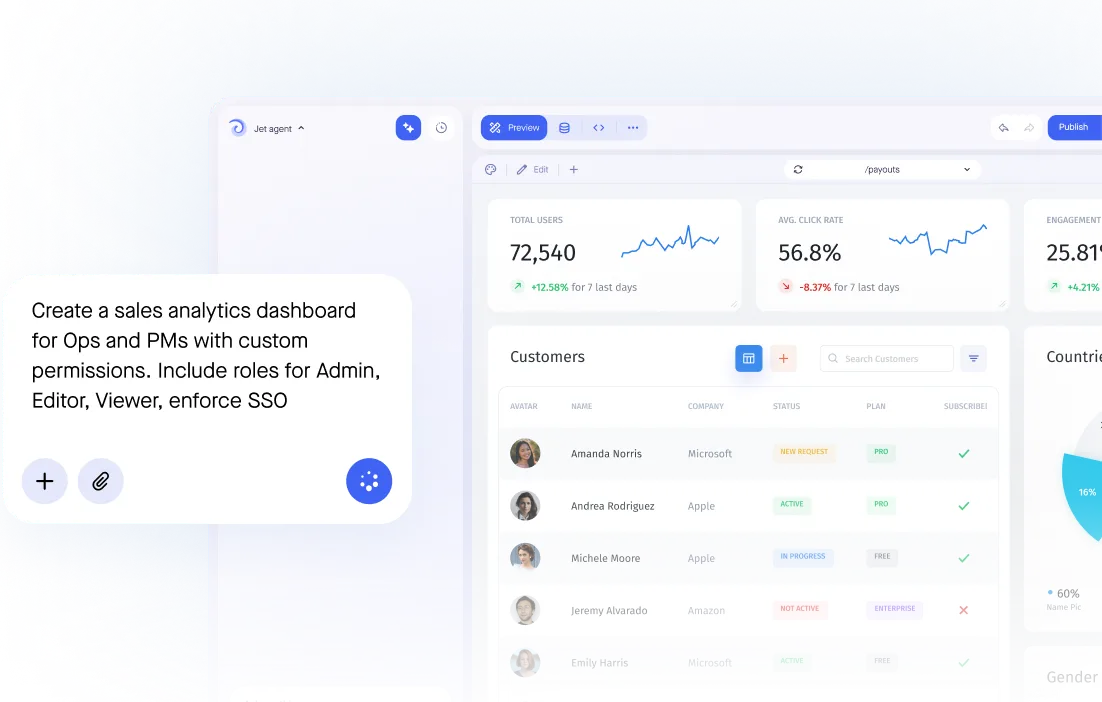
With Jet Admin's no-code platform, you can generate your facility management app, connect your existing property and asset data, configure workflows and permissions, and publish a production-ready tool without writing code. Get started by selecting the facility management template from the template library.
Why use this facility management template
Scattered maintenance requests are one of the most common sources of operational friction in facility management. When occupants submit requests through email, phone calls, or walk-ups, and maintenance staff track tasks on paper or personal spreadsheets, work orders get lost. Inspections get missed. Vendors show up without context. Costs become impossible to review at a portfolio level.
This template helps eliminate those gaps by consolidating facility operations into a centralized location where every stakeholder-facility managers, technicians, vendors, and occupants-works from the same data.
- Centralized data eliminates communication gaps. A work order management system establishes a transparent process for maintenance requests. Every request is logged, assigned, and tracked in one place, so nothing falls through the cracks. Template use can enhance communication among staff, contractors, and facility managers by giving everyone access to the same status updates and history.
- Improved visibility into facility costs, asset conditions, and maintenance schedules. Comprehensive templates include format for budgeting and tracking maintenance costs, so you can analyze spending by facility, asset category, or vendor. Performance metrics help measure operational efficiency in facility management, from average resolution time to SLA compliance rates.
- Consistent inspection processes and vendor management across sites. Uniform inspection checklists ensure consistent safety evaluations across facilities-whether you're tracking fire protection compliance, HVAC inspections, or electrical system checks. Vendor management supports coordinated oversight of service agreements and contractor performance, so you can hold contractors accountable with data rather than assumptions.
- Enhanced collaboration between facility teams, vendors, and occupants. Role-based access ensures users see only relevant information. Maintenance staff see their assigned tasks. Vendors see the work orders and documents relevant to their contracts. Occupants can submit and track requests without accessing sensitive operational data.
- Fewer manual steps for request intake, scheduling, and reporting. Templates can streamline day-to-day operations with less manual work. Instead of manually routing every maintenance request or sending calendar reminders for inspections, automated workflows handle assignment, escalation, and notification-freeing your team to focus on resolving issues rather than managing processes.
According to a SoftwareAdvice survey, roughly 38% of FM buyers still rely on manual methods for facility tasks, and another 28% have no system in place at all. The facilities service management template tracks maintenance requests effectively and replaces the patchwork of tools that most teams have outgrown.
Template features:
Facility and Site Dashboard
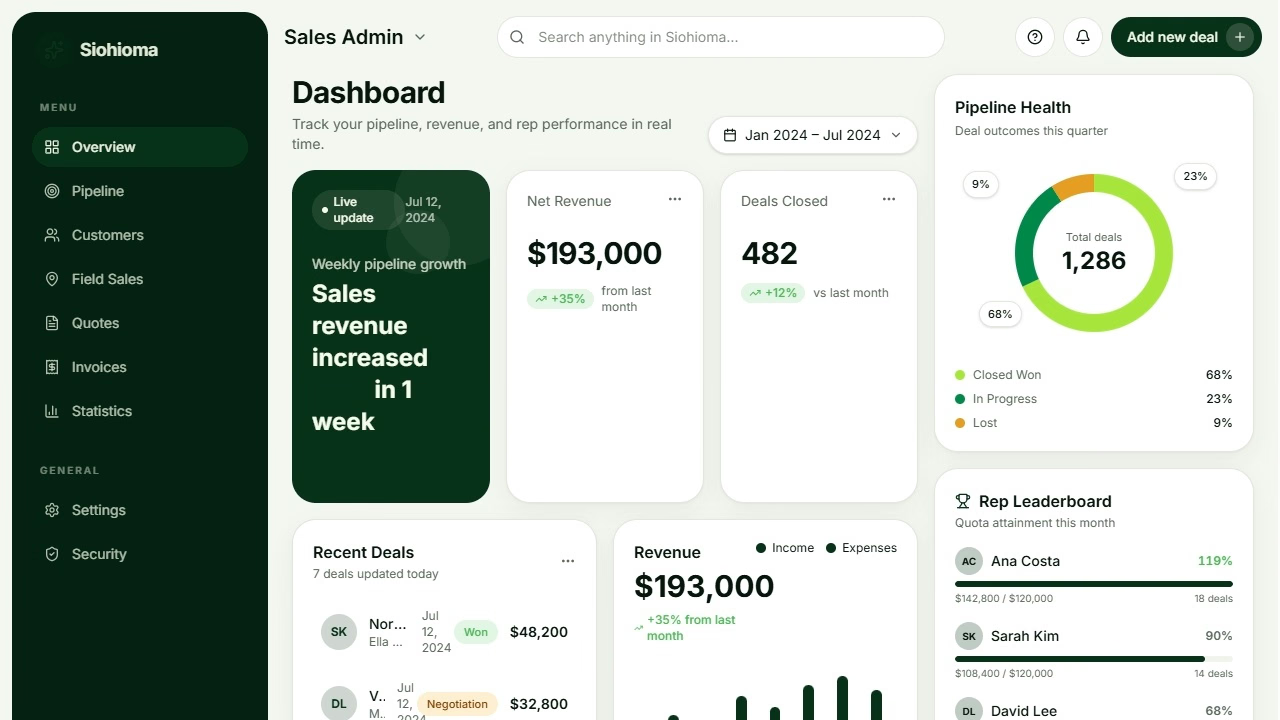
The dashboard provides a real-time overview of all facilities with key metrics and alerts surfaced at the top level. Visual status indicators show active maintenance activities, upcoming compliance deadlines, open work orders by priority, and asset condition summaries. You can filter the dashboard by location, building, or urgency to focus on what needs attention now. Monitoring energy consumption is a critical component of facility management, and dashboard widgets can be configured to surface those data points alongside operational metrics.
Space and Asset Directory
Centralized asset tracking keeps a detailed log of all physical assets-from HVAC systems and electrical panels to office equipment and building infrastructure. The directory organizes records in a hierarchy (site → building → floor → room → asset) so you can navigate from a campus-level view down to a specific piece of equipment. Templates include sections for asset inventory, maintenance schedules, and compliance checklists, with fields for installation date, condition, warranty status, and maintenance history.
Work Order Intake and Management
A streamlined request submission process replaces scattered email and phone-based reporting. Occupants and staff use structured forms to submit maintenance requests with location, description, priority, and supporting photos. The system lets you manage requests through automated assignment rules, so work orders route to the right technicians based on category, location, or skill set. Task management allows staff to view and resolve assigned tasks from a single interface, with status tracking from submission through completion.
Inspection Scheduling System
A preventive maintenance plan uses a set schedule and checklists to keep inspections on track. Configure recurring inspection schedules for safety compliance, fire protection, equipment checks, and building envelope reviews. Mobile-responsive templates allow updates from any device, so inspectors can complete checklists, upload photos, and log findings directly from the field. Regular preventive maintenance improves asset performance and reliability, and reduces the chance of unplanned breakdowns.
Vendor and Contractor Records
The template helps manage clients, contractors, and suppliers from a complete vendor database. Store contracts, certifications, insurance documents, and performance records for every contractor. Set role-based access for different user levels so vendors can view and update their assigned work orders and upload required documentation without accessing broader facility data. This restricted access approach keeps operational data secure while giving contractors the context they need to deliver service.
Document and Expiry Tracking
Store warranties, permits, licenses, insurance certificates, and compliance documents in a centralized location with automated expiry alerts. Templates help maintain compliance by ensuring required inspections and documentation are completed before deadlines. When a vendor's insurance certificate or a building permit approaches its expiration date, the system triggers reminders so nothing lapses unnoticed.
Advanced Filtering and Search
Filter facilities by location, asset type, maintenance status, urgency, or any custom category to find exactly what you need. Quick search works across all facility records and documentation-assets, work orders, vendors, inspection reports-so your team spends less time navigating and more time acting. Create custom reports to track incident frequency, cost trends, or inspection completion rates.
Cost and SLA Reporting
Detailed cost analysis breaks down spending by facility, asset category, vendor, and time period. SLA compliance tracking shows whether maintenance tasks and vendor responses meet agreed-upon thresholds, with visual metrics that make it easy to identify underperformance. These reports give facility managers the data they need to justify budgets, renegotiate contracts, and optimize resource allocation.
Who is this facility management template for?
- Facility Managers overseeing building operations, maintenance schedules, and vendor relationships. The Facility Management template helps organize property-related tasks efficiently, giving you a single platform to assign tasks, track work orders, and review performance metrics across your portfolio.
- Property Operations Teams managing multiple sites and coordinating maintenance activities across locations. Centralized oversight with site-specific data organization means you can standardize processes while accommodating local requirements-different inspection standards, regional vendors, or building-specific equipment.
- Workplace Teams handling space allocation, occupancy tracking, and employee requests. Customize request types for specific team needs-from office moves and furniture requests to climate complaints and access issues-so every request follows a consistent workflow.
- Maintenance Departments scheduling inspections, tracking work orders, and managing assets. A maintenance checklist ensures technicians follow consistent procedures whether they're servicing HVAC systems, completing electrical inspections, or responding to emergency repairs. Preventive maintenance prevents costly breakdowns and unplanned downtime by keeping equipment on a regular service calendar.
- Educational Institutions managing campus facilities, safety compliance, and maintenance across multiple buildings-labs, dorms, administrative offices, dining halls, and athletic facilities. Track everything from fire protection inspections to vendor contracts for landscaping and construction projects.
- Healthcare Organizations ensuring regulatory compliance, equipment maintenance, and safe facility operations. Safety and compliance monitoring ensures adherence to health and safety codes, with inspection checklists and document tracking built into daily workflows. Facility management templates help prevent unexpected equipment failures-critical in environments where equipment reliability directly impacts patient care.
- Multi-site Organizations coordinating facility management across different locations and regions. Whether you're a retail chain standardizing store maintenance or a corporate business managing a portfolio of office buildings, the template provides consistency without sacrificing flexibility.
How to set up your facility management template
- Select the facility management template from Jet Admin's template library and configure basic settings. Choose the facility management template as your starting point. This gives you the pre-built record types, dashboards, forms, and workflows designed for facility operations-no need to build from scratch.
- Connect your existing data sources. Link your property and asset data through native connections to PostgreSQL, MySQL, Supabase, Airtable, or Google Sheets. Templates can connect with various data sources like Google Sheets, so you can work with whatever system currently holds your facility information. If you need to connect an existing CMMS or property management system, use API-based integrations to pull in records.
- Map your facility data fields to the template structure. Align your existing data-buildings, rooms, assets, vendors, work orders-with the template's record types. Define your site hierarchy, asset categories, and work order classifications so the system reflects how your organization actually operates. A centralized location helps log maintenance issues and requests in a structured format.
- Customize the interface. Add your organization's branding, configure dashboard layouts to highlight the metrics that matter most to your team, and set up request forms for occupants and staff. Adjust field labels, dropdown options, and views to match your terminology and processes.
- Configure automated workflows. Set up workflow rules for work order assignments, inspection reminders, document expiry alerts, and vendor notifications. Connect Gmail or Slack for notifications so your team receives alerts where they already work. Preventive maintenance reduces unplanned breakdowns and downtime when schedules and reminders run automatically.
- Set user permissions and access levels. Configure role-based access for facility managers, maintenance staff, vendors, and occupants. Each role sees only the data and actions relevant to their responsibilities, ensuring smooth operations and data security across your organization.
- Test and publish. Run the system with sample data and workflows to validate that assignments route correctly, reminders fire on schedule, and dashboards display accurate metrics. Once confirmed, publish your facility management app and roll it out to your team.
Ready to deploy a complete facility management solution tailored to your operations? Start building with Jet Admin and go from template to production app without writing code.
Frequently asked questions
What is a facility management template?
A facility management template is a pre-built application structure that provides the records, workflows, dashboards, and forms needed to manage facilities, assets, and maintenance operations. It includes standard data types-sites, buildings, rooms, assets, work orders, inspections, vendors, costs, and documents-so you can deploy a working facility management system without building from scratch. The facility management template centralizes tasks and checklists into a single workspace that your entire team can access.
Can multiple buildings be managed with this template?
Absolutely. The template supports multi-site management with centralized oversight and site-specific data organization. You can set up a hierarchy of sites, buildings, floors, and rooms, then filter dashboards and reports by location. Each site maintains its own assets, work orders, vendors, and inspection schedules while rolling up to portfolio-level metrics for leadership review.
Can work orders and inspections be included in the template?
Yes. Work order intake, assignment, and tracking are core features. Occupants and staff submit maintenance requests through structured forms, and automated rules can assign tasks to the appropriate technicians based on category or location. Inspection scheduling supports recurring checklists for safety, compliance, and preventive maintenance-with mobile-friendly access so inspectors can complete reviews and upload documentation from any device.
Can vendors have restricted access to the system?
Set role-based access for different user levels to control what vendors can see and do. Contractors can access their assigned work orders, upload required documentation, and update task status without viewing broader facility data, financial reports, or other vendor records. This keeps your operational data secure while giving contractors the context they need.
Can document and maintenance reminders be automated?
Configure automated notifications for document expiration dates, upcoming maintenance schedules, inspection deadlines, and SLA thresholds. Alerts can be sent through email (Gmail) or Slack so your team and vendors receive reminders where they already communicate. This ensures required inspections and documentation are completed on time without manual follow-up.
Can I connect my existing CMMS system?
Jet Admin supports native connections to databases like PostgreSQL, MySQL, and Supabase, and API-based integrations for connecting existing CMMS, property management, or mapping systems. This means you can pull in historical work order data, asset records, and maintenance logs from your current tools rather than starting with a blank database. The global FM software market is projected to reach $9.6 billion by 2033, and integration with existing systems is consistently identified as the most critical factor in successful FM technology adoption.
How quickly can the facility management template be deployed?
Deployment time depends on the volume and complexity of your existing data, the number of sites and asset types, and how much customization you need beyond the default template structure. Teams with clean, structured data in a supported source like PostgreSQL or Google Sheets can have a working prototype configured and tested within days. More complex deployments involving multiple data sources, custom workflows, and extensive permission structures will take longer to configure and validate.

.svg)



Use Cases
Categories
Features
Similar templates




Connect & sync your data with 30+ data sourse’s


Build frontend Apps 10x faster


Frequently asked questions
Deployment time depends on the volume and complexity of your existing data, the number of sites and asset types, and how much customization you need beyond the default template structure. Teams with clean, structured data in a supported source like PostgreSQL or Google Sheets can have a working prototype configured and tested within days. More complex deployments involving multiple data sources, custom workflows, and extensive permission structures will take longer to configure and validate.
Jet Admin supports native connections to databases like PostgreSQL, MySQL, and Supabase, and API-based integrations for connecting existing CMMS, property management, or mapping systems. This means you can pull in historical work order data, asset records, and maintenance logs from your current tools rather than starting with a blank database. The global FM software market is projected to reach $9.6 billion by 2033, and integration with existing systems is consistently identified as the most critical factor in successful FM technology adoption.
Configure automated notifications for document expiration dates, upcoming maintenance schedules, inspection deadlines, and SLA thresholds. Alerts can be sent through email (Gmail) or Slack so your team and vendors receive reminders where they already communicate. This ensures required inspections and documentation are completed on time without manual follow-up.
Set role-based access for different user levels to control what vendors can see and do. Contractors can access their assigned work orders, upload required documentation, and update task status without viewing broader facility data, financial reports, or other vendor records. This keeps your operational data secure while giving contractors the context they need.
Yes. Work order intake, assignment, and tracking are core features. Occupants and staff submit maintenance requests through structured forms, and automated rules can assign tasks to the appropriate technicians based on category or location. Inspection scheduling supports recurring checklists for safety, compliance, and preventive maintenance-with mobile-friendly access so inspectors can complete reviews and upload documentation from any device.
Absolutely. The template supports multi-site management with centralized oversight and site-specific data organization. You can set up a hierarchy of sites, buildings, floors, and rooms, then filter dashboards and reports by location. Each site maintains its own assets, work orders, vendors, and inspection schedules while rolling up to portfolio-level metrics for leadership review.
A facility management template is a pre-built application structure that provides the records, workflows, dashboards, and forms needed to manage facilities, assets, and maintenance operations. It includes standard data types-sites, buildings, rooms, assets, work orders, inspections, vendors, costs, and documents-so you can deploy a working facility management system without building from scratch. The facility management template centralizes tasks and checklists into a single workspace that your entire team can access.