Inspection Checklist
App
Inspection Checklist
Overview
An inspection checklist template replaces clipboard-and-paper workflows with a mobile-first digital app that standardizes how your team conducts inspections, captures evidence, and generates reports. Instead of dealing with illegible notes, lost forms, and inconsistent evaluations across inspectors, you get a structured digital inspection process that connects directly to your existing data and produces audit-ready documentation automatically.
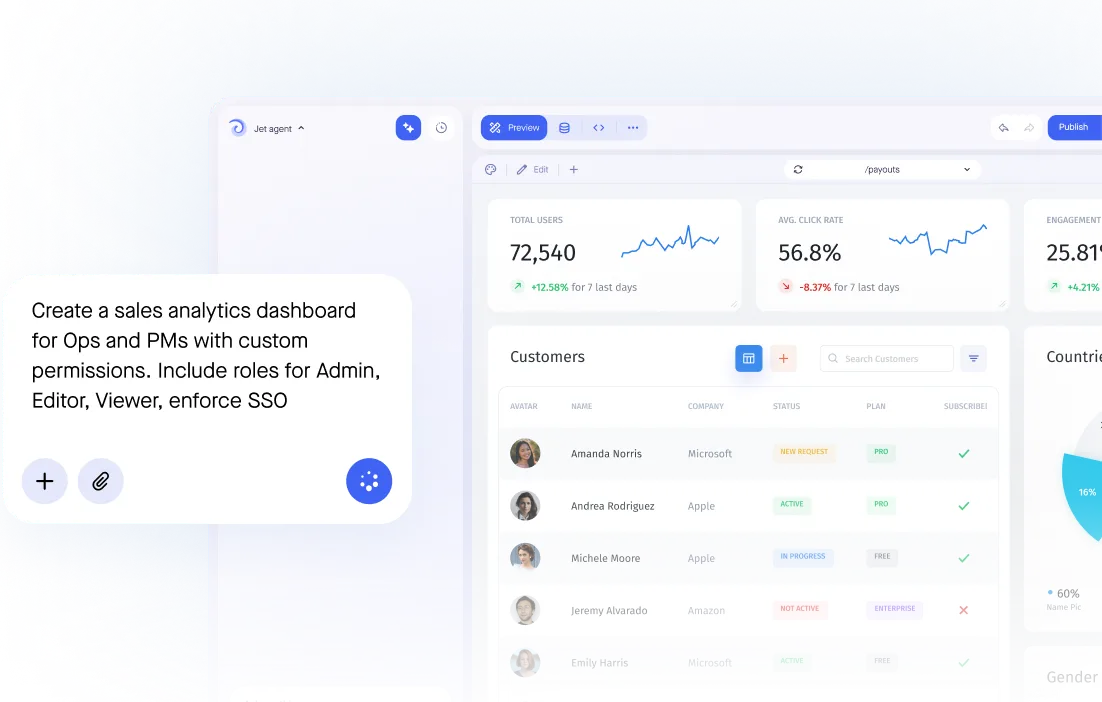
This inspection checklist template from Jet Admin is an AI-powered no-code app that lets you build custom inspection forms with pass/fail responses, numeric scoring, mandatory photo capture, and corrective action workflows-all without writing code. Connect it to your existing PostgreSQL, MySQL, or Airtable database, or use the built-in data layer to start from scratch. The template adapts to your specific needs: safety inspections on construction sites, equipment checks on manufacturing floors, facility audits across a property portfolio, food safety compliance in restaurant chains, or vehicle condition reports in automotive fleets.
Customization of checklists for specific industries ensures relevance and compliance to standards, whether you're aligning with OSHA requirements, ISO protocols, or internal quality criteria. Inspection checklists must align with OSHA and ISO standards, and this template provides the structure to document whether applicable standards have been met at every checkpoint.
Every completed inspection creates a permanent, searchable record with timestamps, photos, location data, and inspector identification-giving auditors and compliance officers exactly what they need.
Ready to digitize your inspection process? Start building with the inspection checklist template.
Why use this inspection checklist template
Manual inspections create gaps that cost time, money, and accountability. Paper checklists get lost between the field and the office. Handwritten notes become illegible. Different inspectors evaluate the same items inconsistently. And when a regulatory audit arrives, pulling together documentation from filing cabinets and spreadsheets turns into a scramble.
This checklist template addresses each of those pain points directly.
- Centralized inspection data with full audit trails. Every inspection record-responses, photos, scores, corrective actions-lives in one database. Whether you use the built-in PostgreSQL storage or connect to your existing MySQL, Airtable, or REST API systems, all inspection data is searchable, filterable, and traceable. Inspection checklists provide clear documentation for regulatory bodies, and structured checklists improve audit readiness and compliance documentation.
- Real-time visibility across sites and assets. A live dashboard shows inspection status, pass rates by site or inspector, and overdue corrective actions. Property managers overseeing dozens of buildings and quality control leads monitoring multiple production lines get a consistent view without chasing individual reports. Regular inspections help identify maintenance needs before they escalate-and this template makes overdue inspections impossible to miss.
- Consistent, standardized evaluations. Digital inspection forms eliminate inspector variability. Every inspector follows the same checklist with the same criteria, the same required evidence fields, and the same scoring logic. Checklist items break requirements into measurable inspection points, so nothing gets skipped or subjectively evaluated. Inspection result options include Pass, Fail, Not Applicable, or Needs Attention, ensuring every item is properly evaluated.
- Automated corrective action workflows. When an inspection item fails, the template can automatically create a corrective action task with an assignee, due date, and priority level through Jet Admin's workflow automation. Automated work orders can be generated from inspection findings, connecting the inspection directly to the repair or remediation work. Corrective action plans designate spaces to note deficiencies and assign tasks for fixing them-no separate tracking spreadsheet needed.
- Fewer manual steps throughout the process. Auto-calculated inspection scores replace manual arithmetic. PDF reports generate automatically on completion. Recurring inspection schedules trigger email or SMS reminders to assigned inspectors. Companies using checklists can rectify issues before they escalate, and the automation built into this template ensures that follow-up happens reliably. Regular inspections reduce unplanned failures by 55%, and keeping that cadence consistent is far easier when the scheduling is automated.
- Accountability at every step. Inspection checklists must establish accountability and outline actionable criteria. Every submission is timestamped, tied to a specific inspector, and logged with evidence. Deficiency documentation specifies the nature of the risk and why an item failed, creating a clear record that holds teams accountable.
Template features
Flexible Inspection Checklist Builder
Create custom checklists with multiple item types to match any inspection process. Add yes/no questions for simple compliance checks, pass/fail/N-A responses for equipment condition assessments, numeric fields for temperature readings or measurement data, text notes for inspector observations, and mandatory photo capture for visual evidence. Quality control inspection checklists should include a defect log and performance tracking, and this builder lets you configure exactly those elements. Digital inspection forms can be created using drag-and-drop builders, and Jet Admin's visual editor lets you modify form layout, field order, and validation rules without code.
A comprehensive quality control inspection checklist template includes inspection overviews and visual checks. Visual inspection items can assess a product's finish, color, and overall appearance against approved standards-configured directly in the checklist builder with reference images and pass/fail criteria.
Mobile-Responsive Field Inspection Forms
Inspectors complete checklists on any device-phone, tablet, or laptop. The mobile-responsive publishing ensures forms render correctly on every screen size. Offline capability means inspectors in basements, warehouses, construction sites, or remote facilities can complete their full inspection without connectivity, and data auto-syncs when the device reconnects. No native app installation required.
Photo Evidence Collection
Capture multiple photos per checklist item with automatic timestamp and location data attached as metadata. Effective checklists should include fields for attaching photos or supporting documents, and this template makes photo upload available at every inspection point. Photos are stored alongside the inspection record and included in generated reports-critical for compliance documentation where auditors need visual evidence tied to specific items inspected.
Automated Inspection Scoring
Custom JavaScript calculations automatically compute inspection scores based on weighted responses and item criticality. Assign higher weight to safety-critical items-emergency equipment functionality, hazard controls, structural integrity-and lower weight to cosmetic or minor observations. The aggregate score appears immediately upon completion, giving inspectors and managers instant visibility into overall inspection quality. AI-powered checklists can achieve 99.4% defect detection accuracy when combined with structured scoring criteria and mandatory evidence capture.
Corrective Action Workflow Automation
Failed inspection items automatically trigger corrective action task creation. Each task includes the failed item description, assignee, due date, priority level, and reference photos. Actionable items in checklists clarify what needs immediate fixes versus long-term solutions, and the workflow lets you categorize by urgency. Templates should specify follow-up inspections and confirm that corrective actions have been completed-the corrective action tracking in this template closes that loop. Set up notifications via Slack for urgent failures or email for standard follow-up through Jet Admin's workflow automations.
Scheduled Recurring Inspections
Set up automated inspection schedules-daily safety walks, weekly equipment checks, monthly facility audits-with email and SMS reminders sent to assigned inspectors before due dates. Twilio integration handles SMS delivery; email sends through built-in workflow actions. Regular inspections reduce workplace injuries by preventing hazards, and automated scheduling ensures those inspections actually happen on cadence without someone manually tracking a calendar. AI-assisted inspections can increase asset coverage by 600% when recurring schedules ensure nothing falls through the cracks.
Inspection Dashboard and Reporting
A real-time dashboard displays pass rates by site, inspector performance metrics, overdue corrective actions, and inspection completion trends. Filter by date range, location, inspector, or asset category. Inspection forms evaluate compliance and quality across different industries, and the dashboard gives managers the aggregated view they need to identify patterns-which sites consistently fail, which equipment categories show recurring maintenance issues, which inspectors catch more defects.
PDF Report Generation
Automatically generate professional inspection reports on completion. Each PDF includes all responses, photos with metadata, calculated scores, inspector identification, and corrective action items with assigned owners. Reports can be stored in Google Drive, emailed to stakeholders, or archived for compliance. Inspection checklists promote accountability and provide clear documentation, and auto-generated PDFs eliminate the hours typically spent compiling report data after the fact. AI-powered inspections can reduce unplanned line stops by 45% when report delivery is immediate and corrective actions launch automatically.
Who is this inspection checklist template for?
This template serves teams across different industries who need to conduct, track, and report on regular inspections with consistent criteria and documented evidence.
- Quality control managers in manufacturing. Conduct production line inspections and product quality audits with standardized scoring. Track defects, monitor machinery condition, verify that safety glasses and PPE compliance are maintained, and generate quality control reports. Equipment inspection forms ensure safe and fit conditions for machinery, and this template connects directly to your existing asset registry via PostgreSQL or REST API. Quality control inspection checklist templates should include clear identification data and specific inspection items-this template provides both.
- Facilities and property managers. Perform building safety checks, equipment inspections, and tenant walkthrough assessments across a portfolio of properties. Property inspection checklists help landlords maintain property conditions, track maintenance issues before they become costly repairs, and document the condition of assets for insurance or regulatory purposes. Monitor fire safety equipment, HVAC systems, lighting, security controls, and structural elements from a centralized admin panel.
- Construction site supervisors. Track safety compliance, equipment condition, and regulatory requirement adherence on active job sites. Identify hazards, verify that controls are present and functioning, and document PPE compliance. Offline mobile forms are vital for construction environments where connectivity is unreliable. Safety inspection checklists are vital for regulatory compliance documentation, and this template generates the records OSHA inspectors expect.
- Food safety and health compliance officers. Document restaurant inspections, kitchen audits, hygiene checks, and sanitation compliance with photo evidence and weighted scoring. Food safety inspections require consistent criteria across locations-temperature logs, cleanliness ratings, storage compliance, employee health and hygiene verification. Failed items create corrective action work orders with delivery dates and assigned responsibility.
- Manufacturing quality assurance teams. Monitor production equipment performance, environmental conditions, and process compliance. Track data across shifts and lines. Use numeric measurement fields for tolerances, pass/fail for critical safety items, and photo evidence for visual quality checks. Inspection checklists ensure compliance with safety regulations across the manufacturing floor.
- Field service technicians. Conduct customer site inspections, equipment maintenance checks, installation verifications, and vehicle inspections. Capture condition data in the field, submit completed inspection reports from mobile devices, and trigger follow-up work orders when repairs are needed. Templates can be customized for various inspection purposes, whether automotive service, facility maintenance, or compliance audits.
How to set up your inspection checklist template
Getting your inspection app running follows a clear sequence-from template selection through publishing a mobile-ready inspection form to your team.
Step 1: Select the inspection checklist template from Jet Admin's template library. Choose the inspection checklist template. You can also describe your inspection use case to Jet Admin's AI app builder and generate a starting point tailored to your industry-safety inspections, facility audits, quality checks, or any other inspection type. Select your deployment option: cloud-hosted or self-hosted.
Step 2: Connect your data source. Use the built-in PostgreSQL database if you're starting fresh, or connect to your existing MySQL, Airtable, or REST API systems where your site, asset, or employee data already lives. Native connectors handle two-way sync, so inspection data writes back to your source of truth-no data migration or duplication required.
Step 3: Map your inspection data fields. Configure the data model for your inspection process: sites or assets to be inspected, inspector general information and assignments, checklist items with response types, scoring criteria, and corrective action tracking fields. Map these to existing database columns or create new ones. Inspection checklists should reflect common elements like inspection criteria and pass/fail tracking, and this step ensures your data structure supports them.
Step 4: Customize the inspection interface. Configure checklist item types (pass/fail, numeric, photo, text), set scoring formulas using custom JavaScript, adjust the mobile form layout for field usability, and add conditional logic-for example, requiring a photo when an item is marked as "Fail." The visual editor lets you build the experience your inspectors will actually use, matching it to their workflow and the different types of inspections they perform.
Step 5: Set up workflow automations. Configure automations for corrective action creation when items fail, inspection scheduling on recurring intervals, and notification triggers. Route alerts to Slack channels for urgent failures, send email reports to managers on completion, or trigger SMS reminders via Twilio when inspections are approaching their due date. Effective inspections require follow-up actions to address identified issues, and automations ensure those actions are created and assigned without manual intervention.
Step 6: Configure role-based permissions. Control which inspectors access which sites, which managers view which reports, and which administrators can modify checklist templates. Record-level filtering ensures inspectors see only their assigned inspections while supervisors get cross-site visibility. Governance features including SSO/SAML, audit logs, and access controls support compliance requirements across regulated industries.
Step 7: Test the complete workflow and publish. Run through the full inspection lifecycle: complete an inspection on a mobile device, verify that scores calculate correctly, confirm that corrective action tasks generate from failed items, check that PDF reports include all responses and photos, and validate that scheduled reminders fire. Once verified, publish the app to your inspection team.
Start building your inspection checklist template now-connect your data and publish a mobile inspection app today.
Frequently asked questions
What is an inspection checklist template?
An inspection checklist template is a pre-built app structure that transforms paper-based inspection processes into mobile digital workflows with automated reporting. It defines the items to be inspected, the response types (pass/fail, numeric, text, photo), scoring criteria, and the workflows triggered when items fail-such as corrective action creation and notification delivery. An effective inspection checklist template should document whether applicable standards have been met and maintain a complete audit trail of every inspection submitted.
Can I build custom checklists for different inspection types?
Yes. The template supports creating multiple checklist configurations with different item types, scoring methods, and approval workflows. You can build separate checklists for safety inspections, equipment maintenance checks, facility audits, food safety compliance, vehicle inspections, or any other inspection type your business requires. Each checklist can have its own set of criteria, required evidence fields, and weighted scoring formulas tailored to industry standards and regulations.
Can inspectors complete checklists on mobile devices in the field?
Inspectors can complete checklists on any mobile device-phone or tablet-through the mobile-responsive interface. Offline capability ensures inspections continue even in areas without connectivity, such as basements, remote construction sites, or interior facility spaces. Responses, photos, and notes are stored locally and auto-sync to the central database when connectivity returns, maintaining complete data integrity.
How do I capture photos as evidence during an inspection?
The photo upload component allows inspectors to capture multiple images per checklist item directly from their device camera. Each photo automatically records timestamp and GPS location metadata, creating verifiable evidence for compliance documentation. Photos are stored alongside the inspection record and included in generated PDF reports. You can make photo capture mandatory for specific items-such as when an item is marked as failed-through conditional field configuration.
Can failed items automatically create corrective action tasks?
Workflow automations can be configured to trigger task creation when inspection items are marked as failed or flagged for attention. Each corrective action task includes the deficiency description, assigned team member, due date, and priority level. Managers track outstanding and overdue corrective actions through the inspection dashboard. This ensures that identified issues move directly from detection to resolution without manual handoff or separate tracking systems.
How do I schedule recurring inspections and send reminders?
Scheduled triggers allow you to set up recurring inspections at daily, weekly, monthly, or custom intervals. Automated reminders are sent to assigned inspectors via email or SMS (through Twilio integration) before inspections are due. Management receives notifications for overdue or incomplete inspections. This scheduling capability ensures regular inspections maintain consistent cadence across all sites and assets without manual calendar management.
Can I generate PDF inspection reports automatically?
PDF reports generate automatically upon inspection completion. Each report includes all checklist responses, captured photos with metadata, calculated inspection scores, inspector identification, date and time of completion, and any corrective action items created. Reports can be emailed to stakeholders through workflow actions, stored in Google Drive, or accessed directly from the inspection detail page. This eliminates manual report compilation and ensures every inspection produces consistent, professional documentation ready for auditors, regulators, or internal review.

.svg)


Use Cases
Categories
Features
Similar templates




Connect & sync your data with 30+ data sourse’s


Build frontend Apps 10x faster


Frequently asked questions
PDF reports generate automatically upon inspection completion. Each report includes all checklist responses, captured photos with metadata, calculated inspection scores, inspector identification, date and time of completion, and any corrective action items created. Reports can be emailed to stakeholders through workflow actions, stored in Google Drive, or accessed directly from the inspection detail page. This eliminates manual report compilation and ensures every inspection produces consistent, professional documentation ready for auditors, regulators, or internal review.
Scheduled triggers allow you to set up recurring inspections at daily, weekly, monthly, or custom intervals. Automated reminders are sent to assigned inspectors via email or SMS (through Twilio integration) before inspections are due. Management receives notifications for overdue or incomplete inspections. This scheduling capability ensures regular inspections maintain consistent cadence across all sites and assets without manual calendar management.
Workflow automations can be configured to trigger task creation when inspection items are marked as failed or flagged for attention. Each corrective action task includes the deficiency description, assigned team member, due date, and priority level. Managers track outstanding and overdue corrective actions through the inspection dashboard. This ensures that identified issues move directly from detection to resolution without manual handoff or separate tracking systems.
The photo upload component allows inspectors to capture multiple images per checklist item directly from their device camera. Each photo automatically records timestamp and GPS location metadata, creating verifiable evidence for compliance documentation. Photos are stored alongside the inspection record and included in generated PDF reports. You can make photo capture mandatory for specific items-such as when an item is marked as failed-through conditional field configuration.
Inspectors can complete checklists on any mobile device-phone or tablet-through the mobile-responsive interface. Offline capability ensures inspections continue even in areas without connectivity, such as basements, remote construction sites, or interior facility spaces. Responses, photos, and notes are stored locally and auto-sync to the central database when connectivity returns, maintaining complete data integrity.
Yes. The template supports creating multiple checklist configurations with different item types, scoring methods, and approval workflows. You can build separate checklists for safety inspections, equipment maintenance checks, facility audits, food safety compliance, vehicle inspections, or any other inspection type your business requires. Each checklist can have its own set of criteria, required evidence fields, and weighted scoring formulas tailored to industry standards and regulations.
An inspection checklist template is a pre-built app structure that transforms paper-based inspection processes into mobile digital workflows with automated reporting. It defines the items to be inspected, the response types (pass/fail, numeric, text, photo), scoring criteria, and the workflows triggered when items fail-such as corrective action creation and notification delivery. An effective inspection checklist template should document whether applicable standards have been met and maintain a complete audit trail of every inspection submitted.