Lovable vs Jet Admin: Which one to choose in 2026
This article compares Lovable and Jet Admin, two app development platforms, examining their use cases, strengths, and limitations to help you choose the right one.



1. Use cases - what are the tools for?
Lovable and Jet Admin both help you build apps faster with AI, but they’re aimed at different stages of the product lifecycle.
Lovable is mainly for getting from idea to first working app: you describe what you want, it generates a React + Supabase project, and you get a codebase in GitHub that developers can extend. It shines for MVPs, early SaaS experiments, and quick prototypes where speed matters more than permissions, workflows, or governance.
Jet Admin, on the other hand, is built for long-lived business applications - client portals, internal tools, CRMs, vendor portals, and operations dashboards that teams and customers use every day. Instead of just generating code, it gives you a visual builder, data engine, workflows, permissions, and security in one platform, so non-technical teams can help build and maintain tools without rebuilding everything in code. In practice,
Lovable is great for “let’s see if this idea works,” while Jet Admin is better for “let’s run our business on this.”
Internal Tools
For internal tools, both Lovable and Jet Admin can help, but in very different ways. Lovable can quickly generate an internal admin-style app (for example, a simple panel) so a team has something to click around and test. It’s useful when you just need a fast internal UI to validate an idea or unblock a small team, and you’re comfortable maintaining the React code afterwards.
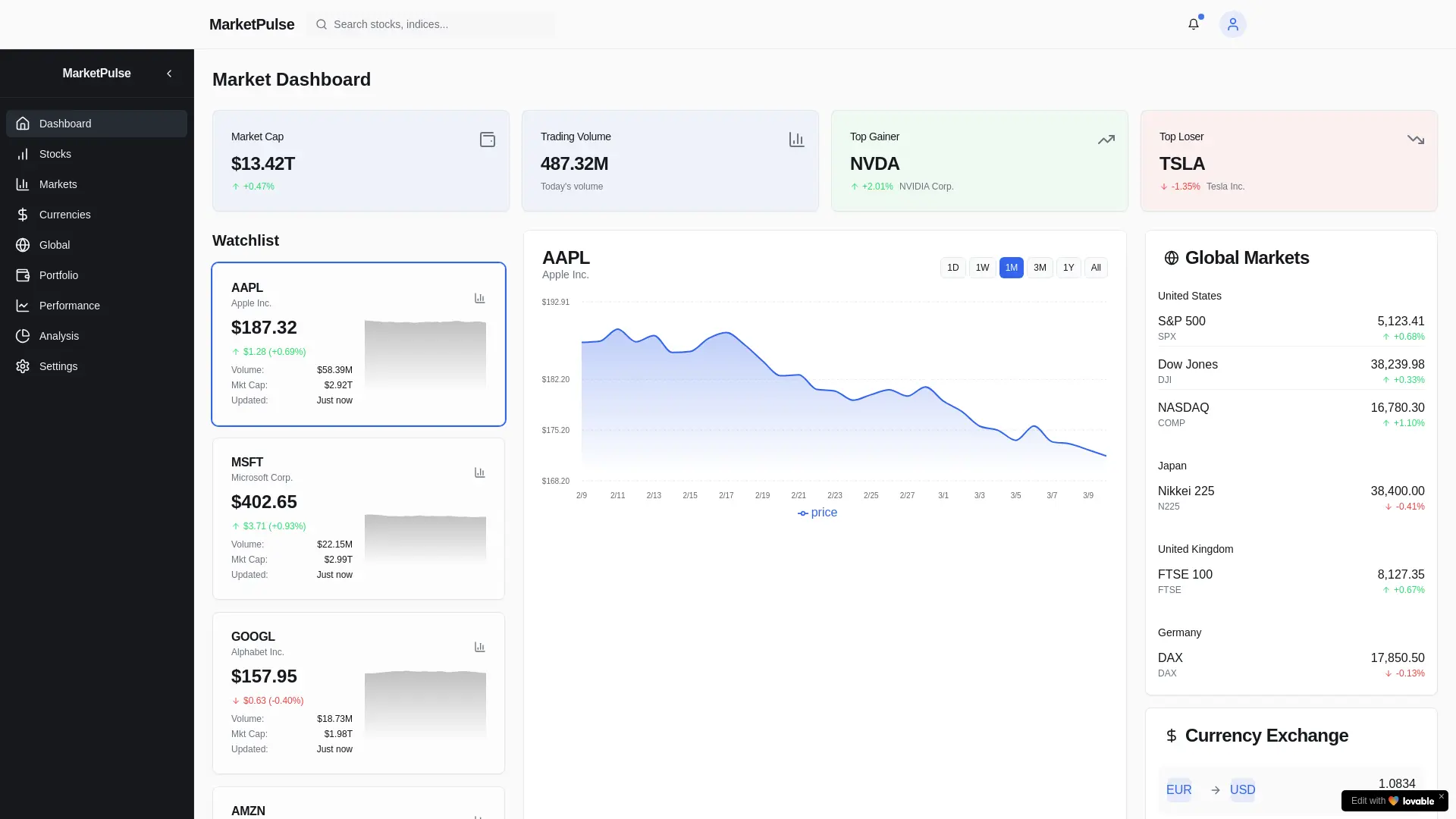
Jet Admin is built specifically for serious internal tools that have to live in production: support dashboards, ops consoles, finance panels, CRMs, back-office UIs, and approval flows. It gives you ready-made components, 100+ data integrations, visual workflows, granular permissions, SSO, and auditability out of the box.
So while Lovable can generate an internal tool quickly, Jet Admin is better suited for the internal tools your company will actually rely on every day, with the right structure, security, and governance.
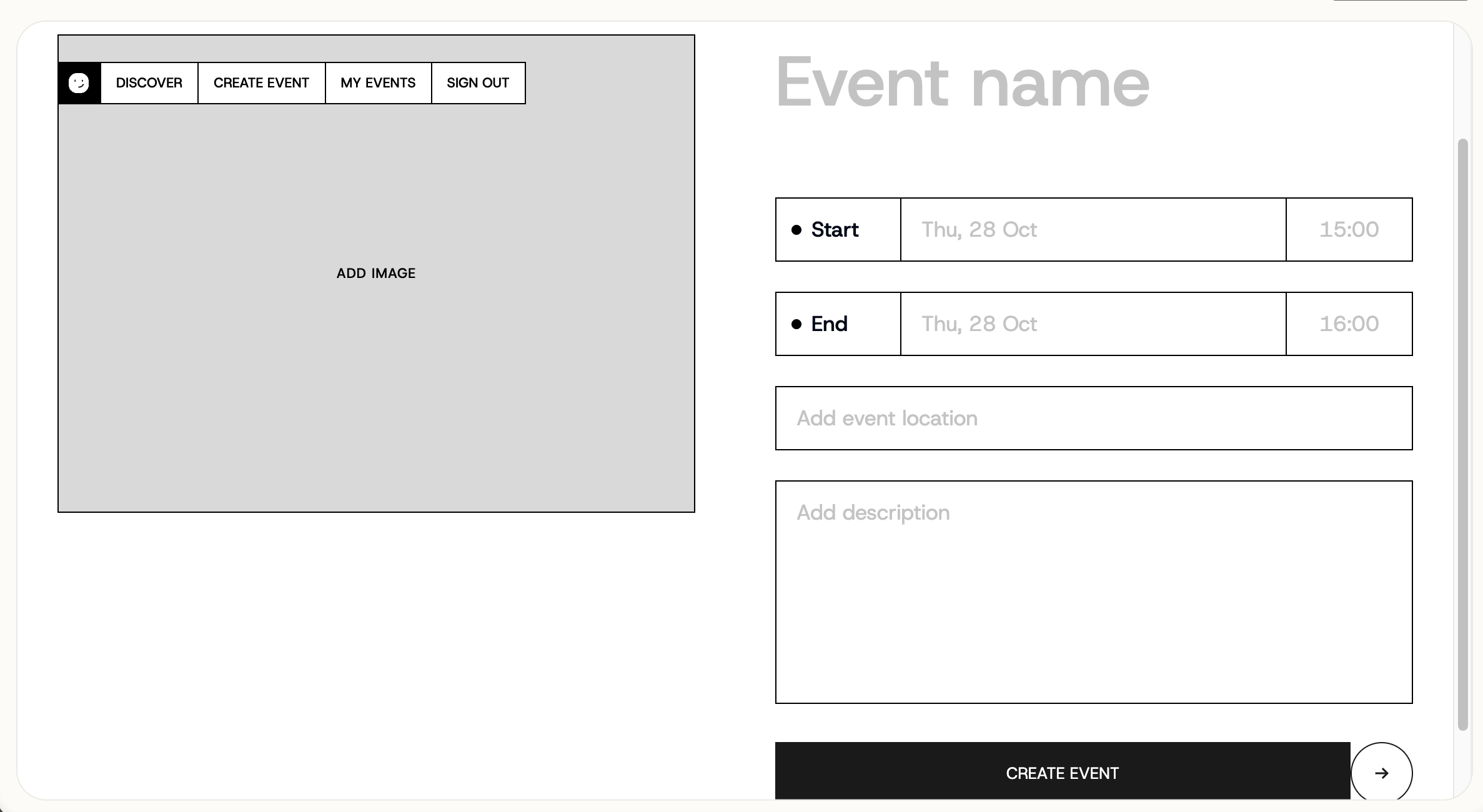
Real app code in Git that developers can extend
Engineers own and maintain the tool in code
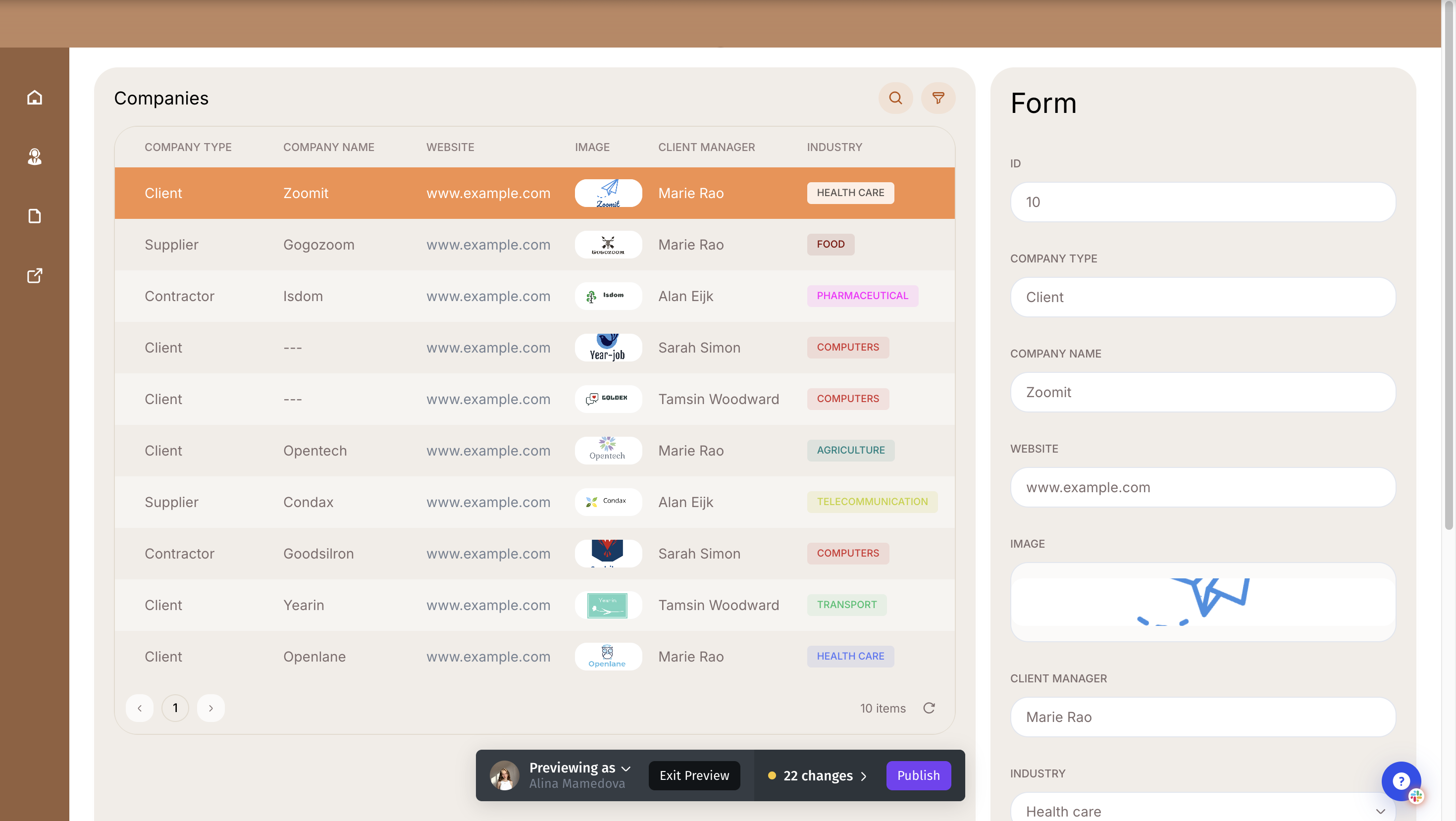
100+ data sources plus built-in PostgreSQL data engine
Drag-and-drop builder with rich components
Client Portals
For client portals, the difference is even clearer.
Lovable can generate a basic app that you turn into a portal with custom React and Supabase logic, but almost everything - auth flows, role separation, brandin, and invitations - has to be coded and maintained by developers.
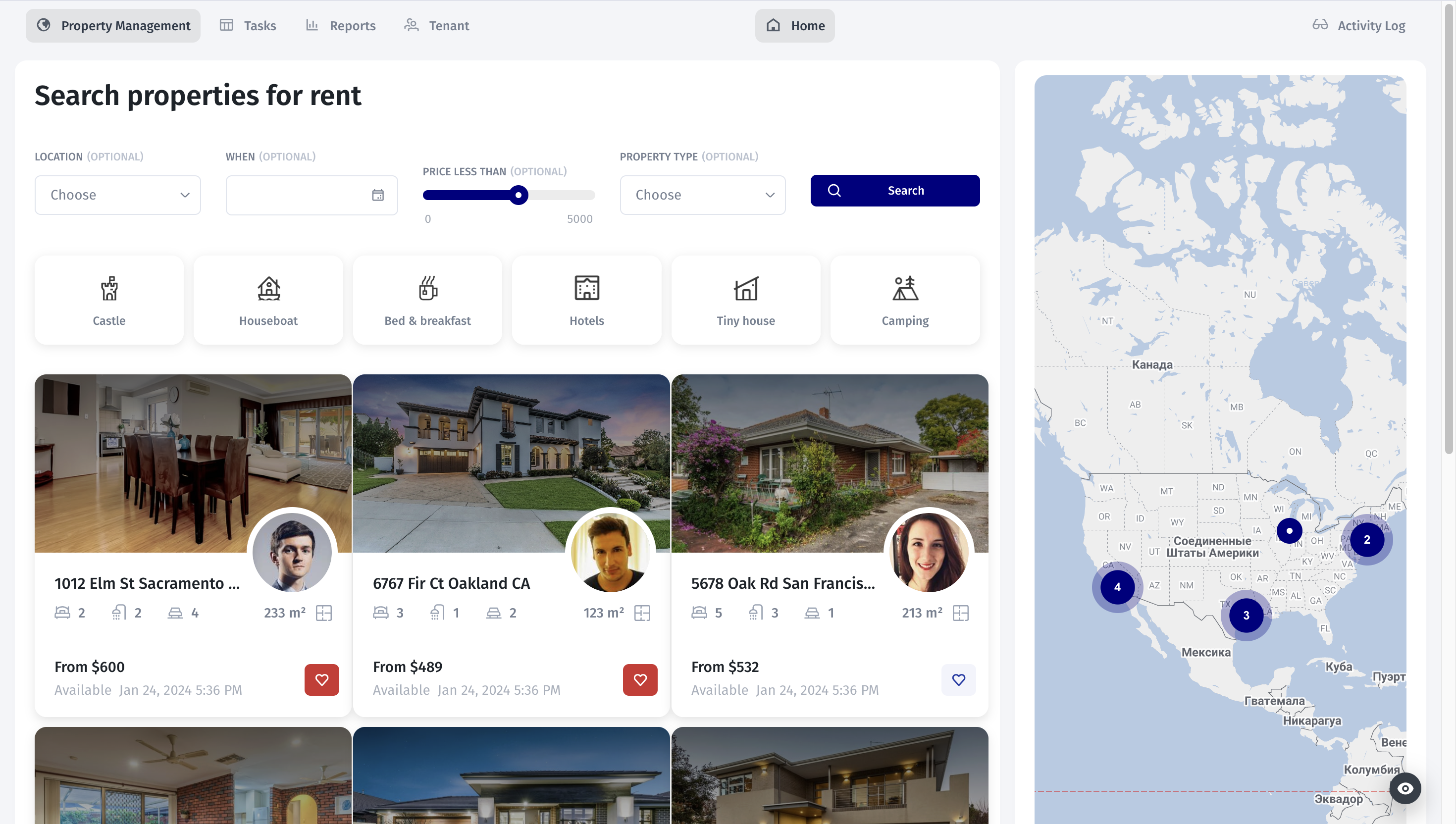
Jet Admin is built with client portals as a core use case: you get ready-made portal layouts, granular permissions, SSO, white-labeling, and portal-friendly pricing (e.g. 500 users for $40/month) built in.
So while Lovable can be used to build a portal, Jet Admin is designed to run client portals at scale with much less custom engineering.
Most auth, roles, and UX need to be implemented by developers
Ready-made portal layouts with polished UI
Websites
Both tools let you create public-facing experiences, but in different ways.
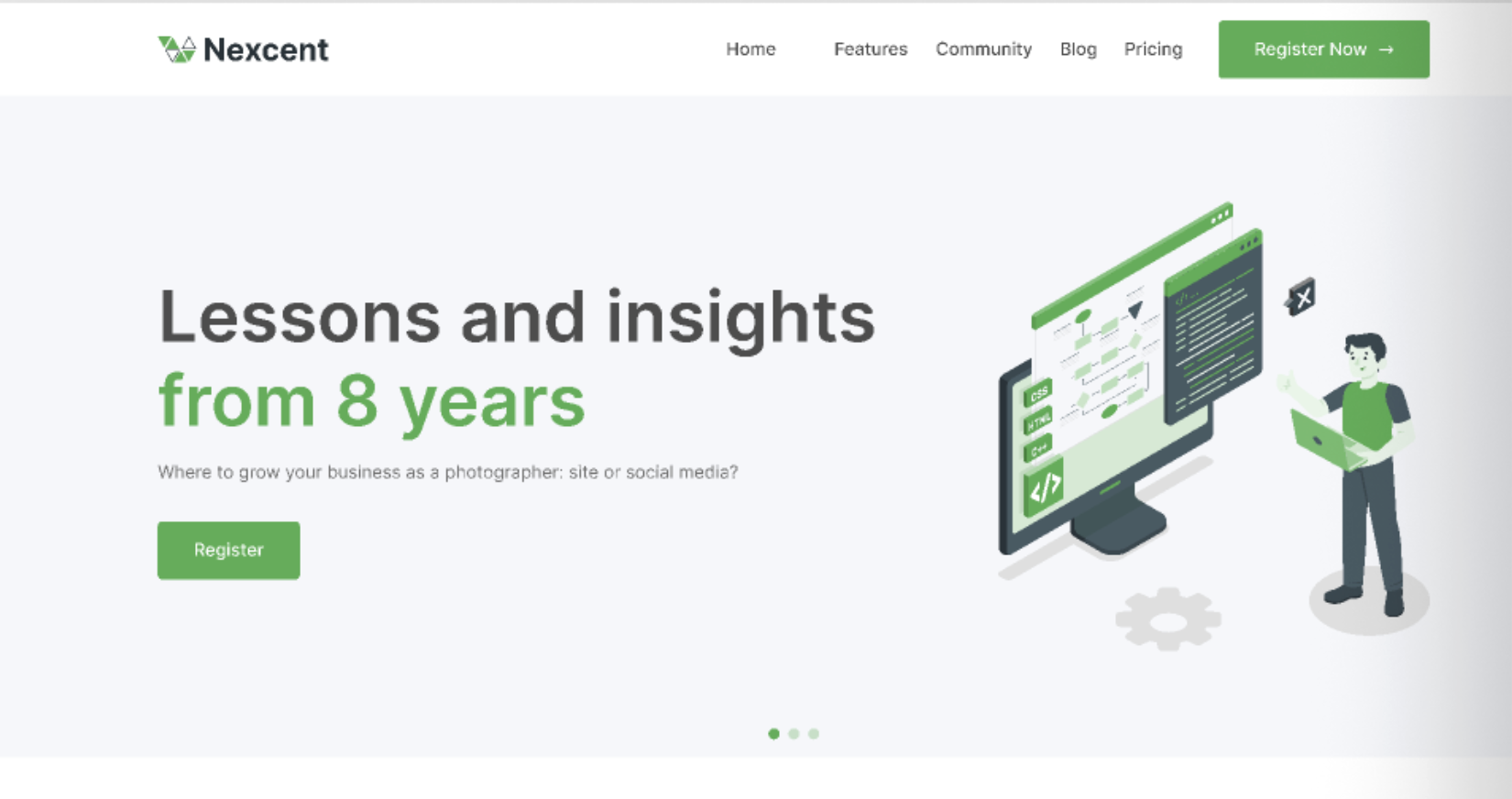
Lovable can generate simple public apps and landing-like pages as part of the React + Supabase project it creates.
Jet Admin, on the other hand, lets you publish pages and dashboards publicly or behind login from the same platform, with the option to turn them into full client portals later.
Mobile & PWAs
Neither Lovable nor Jet Admin builds true native mobile apps, but both run as mobile-friendly web apps and can be added as PWA-style shortcuts to the home screen. The main difference is effort: Lovable needs developers to tune layouts for small screens, while Jet Admin’s portals and dashboards are responsive by default.
The builders - how technical should they be?
With Lovable, you still need a developer mindset. AI can generate the first React + Supabase app, but once you want to change data models, fix bugs, or add non-trivial logic, someone has to be comfortable reading and editing code in GitHub.
Jet Admin is designed so non-technical or semi-technical builders (ops, product, support, analysts) can create and maintain tools: you drag components, configure data, set up workflows and permissions in the UI, and only drop into code for edge cases. Developers can still extend it, but day-to-day changes don’t have to go through engineers, which makes Jet Admin more practical for cross-functional teams.
2. Pricing
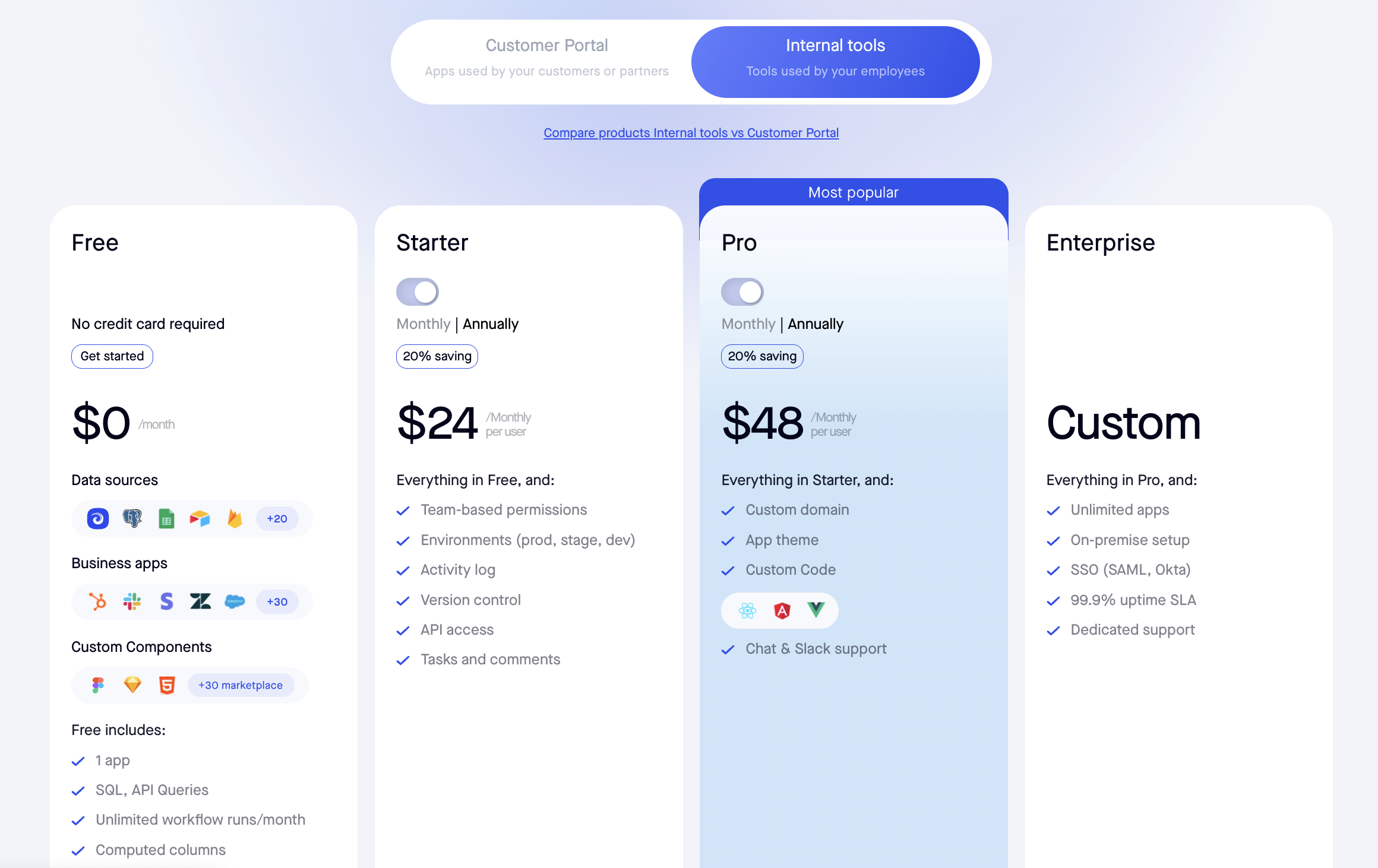
Internal and External users pricing
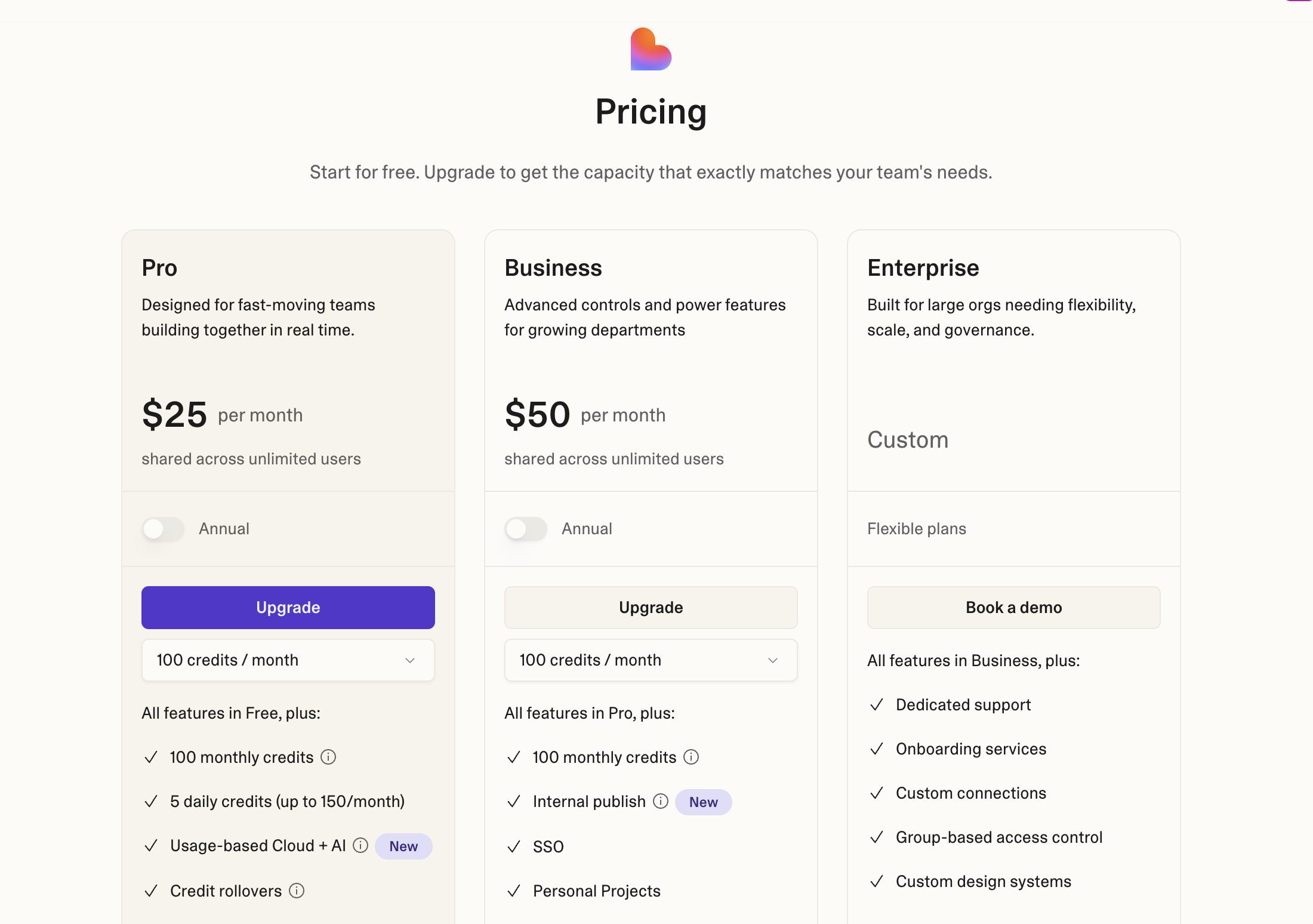
Lovable’s costs are tied to AI credits and hosting a custom React + Supabase app, so there’s no clear, cheap model for large numbers of external users.
Jet Admin has flat, predictable pricing for internal builders and portal-friendly pricing for external users (500 portal users for $40/month), which makes it much easier and cheaper to scale client and partner portals.
Enterprise
Lovable gives you a React + Supabase codebase, but things like SSO, RBAC, audit logs, and compliance all have to be built and maintained by your own team.
Jet Admin is enterprise-ready out of the box: SSO (SAML/Okta), self-host/on-prem, granular permissions, audit logs, and SOC2/GDPR alignment, making it a safer choice for security-sensitive and regulated companies.
Needs custom setup for SSO, RBAC, audit logs, and compliance
Turnkey enterprise layer: SSO, granular RBAC, audit logs, SOC2/GDPR, self-host
3. Learning curve
Learning curve and ease of use
Lovable is very code-centric: once the AI generates your app, you’re working in a React + Supabase repo. For developers with frontend experience, this feels natural - you read code, edit components, and wire logic just like in a normal project. But non-technical users can’t really build or maintain apps there; they’ll always depend on engineers.
Jet Admin is closer to a true low-code platform. Most things - UI changes, data bindings, workflows, permissions - are configured visually, so product, ops, and support teams can learn the basics and start building without deep coding skills. Developers can still extend it, but everyday changes don’t require opening a code editor, which makes the overall learning curve gentler and more accessible for cross-functional teams.
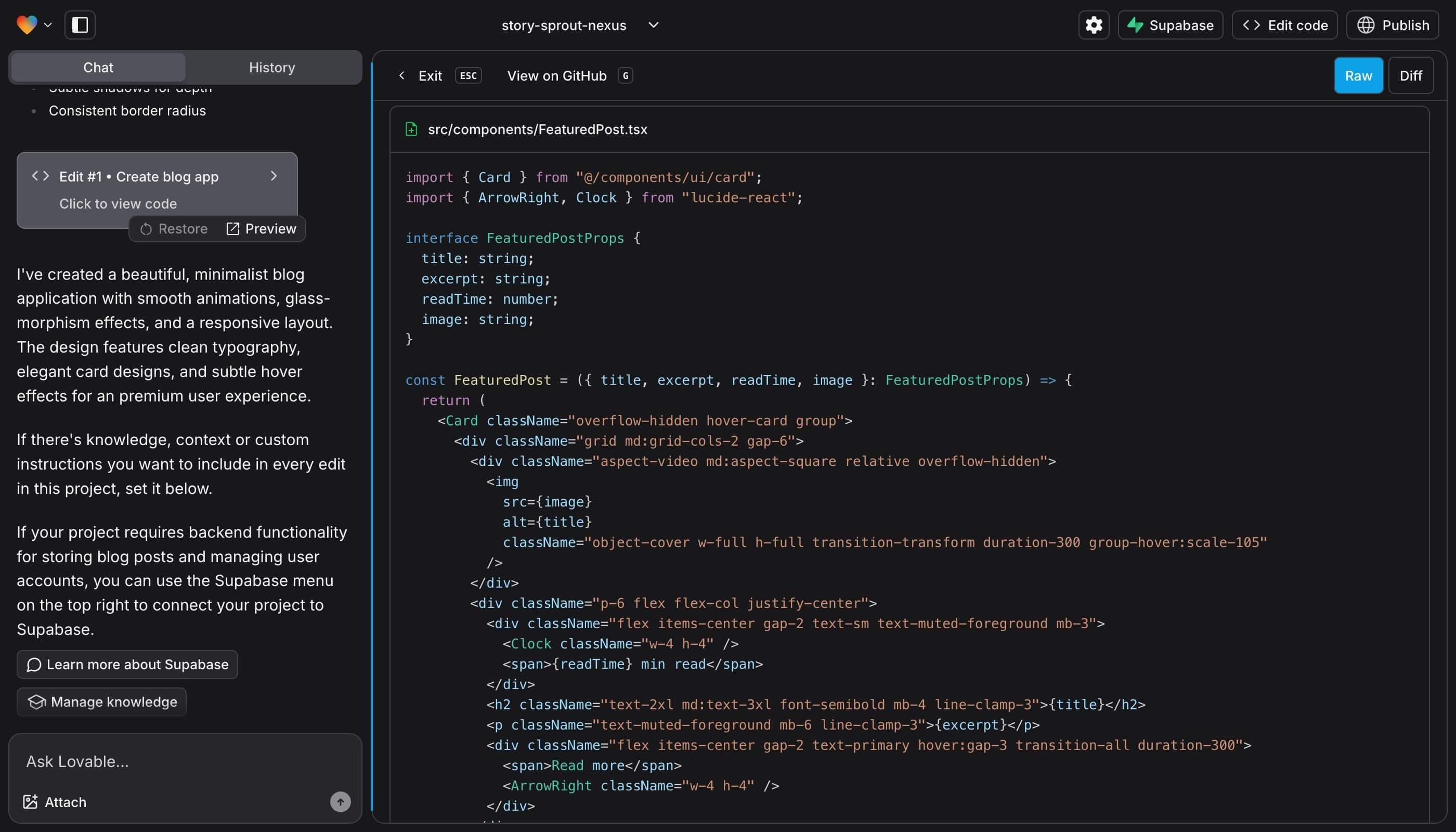

Best if builders are experienced engineers
Visual builder with low learning curve
4. Scalability
How easy it is to upscale the app?
As your product grows: handling more users, data, and features means more engineering work - you’ll be managing performance, environments, refactors, and upgrades in code.
Jet Admin is built to handle growth from the platform side. Instead of constantly restructuring a codebase, most of the growth is managed through configuration and visual building, which makes it easier to support bigger orgs and more complex use cases.
Scales like a regular web app, with full control over infra and performance
Platform-level scaling: easily grow users, portals, and data sources with built-in permissions and governance
5. Users and Permissions
Permission management
Lovable offers group-based access control on its higher plans: you can assign users to groups and restrict parts of the app to those groups. Anything more precise - like “see only your own records”, field-level restrictions, or per-client isolation - has to be implemented as custom logic in the app.
Jet Admin has permissions built into the platform. You define teams and roles, set row-level and field-level rules, control which pages and components are visible to whom, and combine this with SSO and portal users.
Group-based access control on enterprise plan
Built-in granular RBAC: roles, teams, row- and field-level rules
Page/component visibility by user attributes, ideal for multi-tenant portals
Multi-tenancy
Lovable can support multi-tenancy, but you have to design and code it yourself: separate customer spaces, data isolation, and “see only your own records” rules are all implemented at the app and database level by your developers. It’s flexible, but there’s no out-of-the-box tenant model.
Jet Admin is much closer to multi-tenant ready. You can filter data by customer or account, define rules like “user only sees records for their company”, reuse the same app for many clients, and combine this with roles, teams, and SSO. That makes it easier to turn one Jet Admin project into a shared, multi-tenant portal without reinventing the separation logic for every new customer.
Possible, but tenant logic built manually in the app
One app for many clients with built-in tenant filters and permissions
6. UI components
Both tools let you build modern web UIs, but at different levels of convenience.
Lovable gives you a generated app with standard components that you then shape and style in code.
Jet Admin comes with a ready-made component library for business apps that you configure visually. On top of that, Jet Admin includes an AI component creator that can generate new components from a prompt and plug them into your app like native blocks.
Templates
Both Lovable and Jet Admin offer templates to help you start faster.
Lovable gives you AI-driven starter apps from prompts plus some basic templates, while Jet Admin provides templates for real business scenarios.
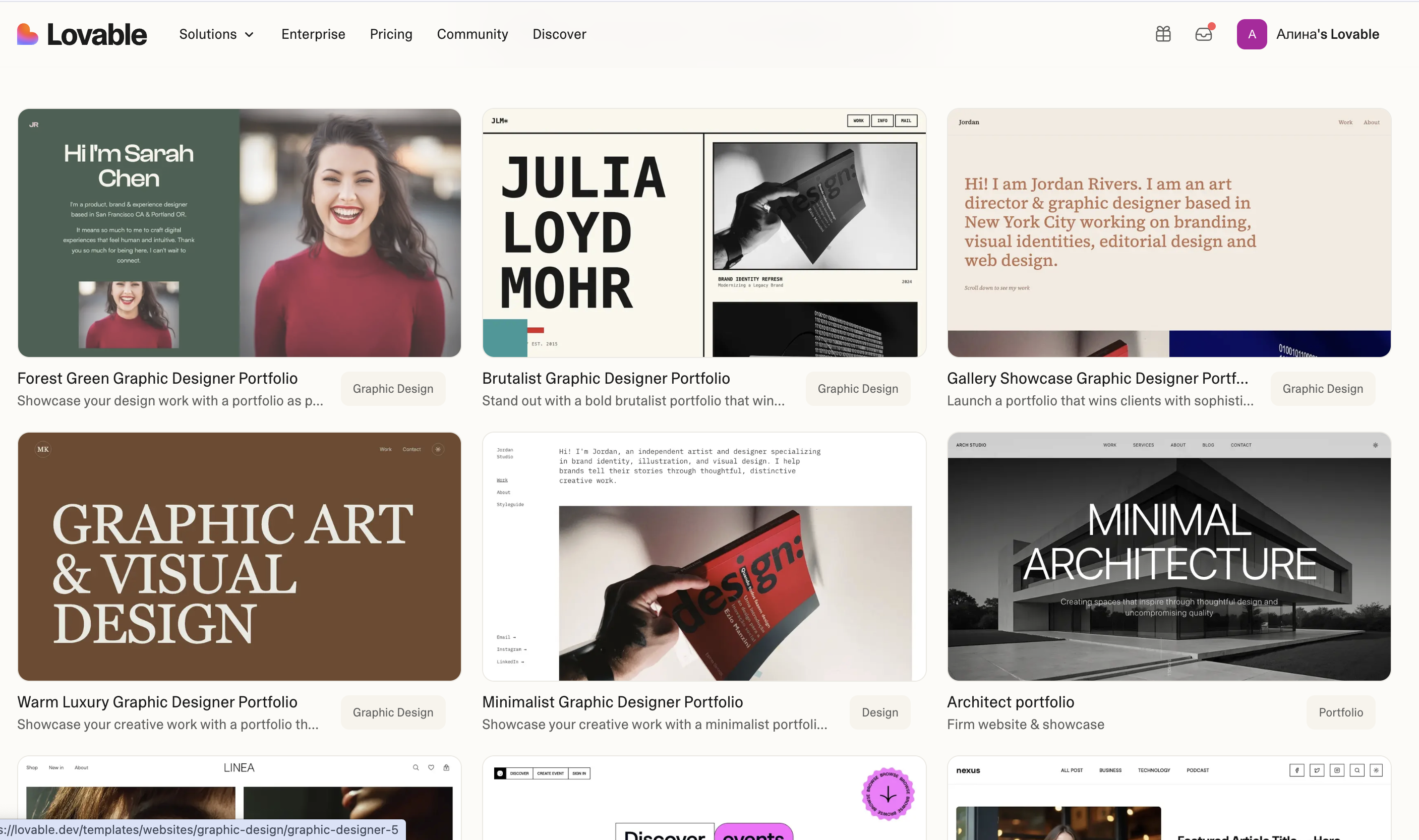
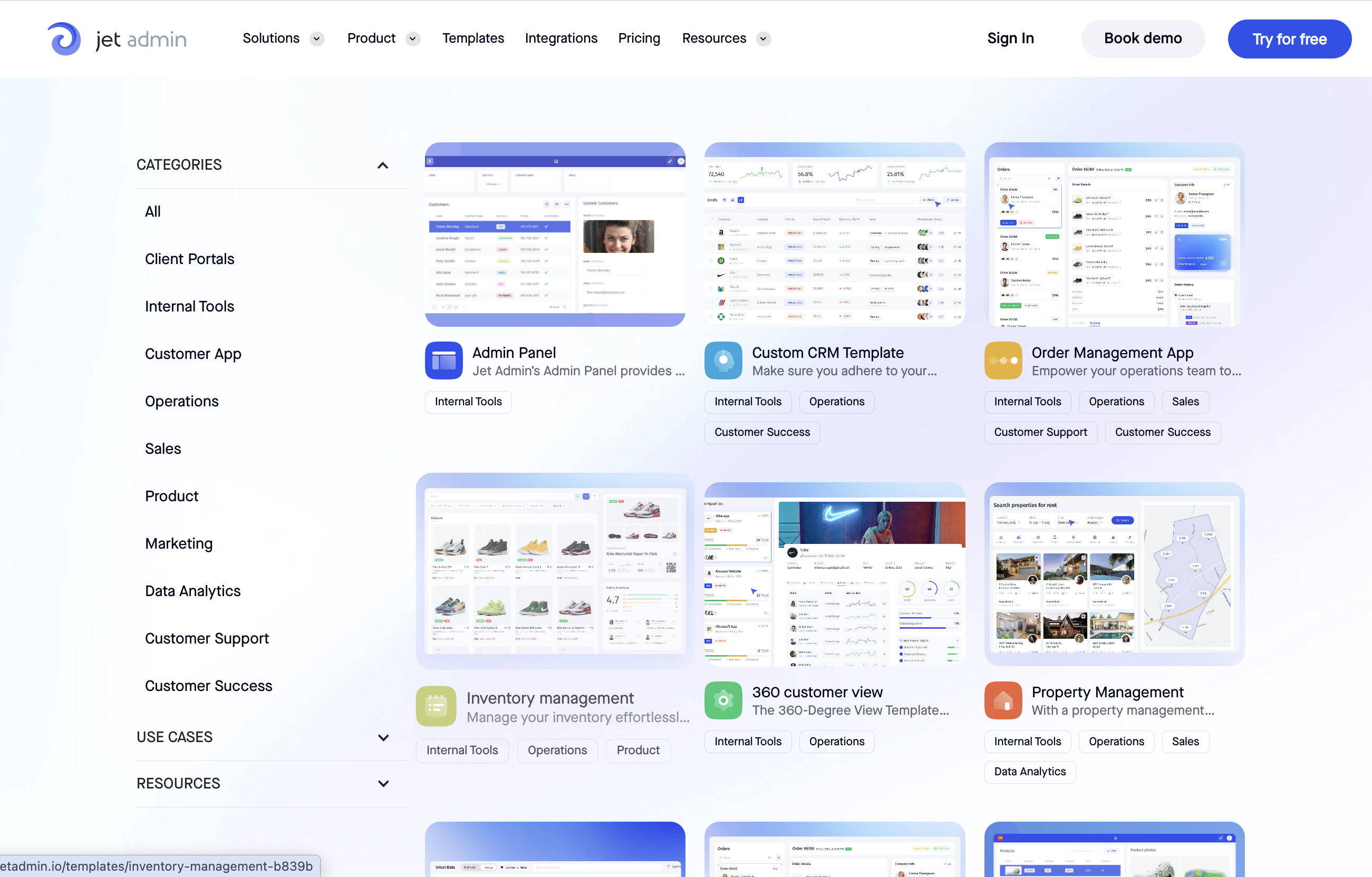
AI-generated starter apps and a few basic templates
Rich library of ready-made templates for different categories
7. Component customization
In Lovable, you customize components directly in code. In Jet Admin, you don’t change the built-in components’ internals, but you can adjust their styles, layout, states, actions, and visibility in the UI, and use the AI component creator when you need a custom block.
Custom components
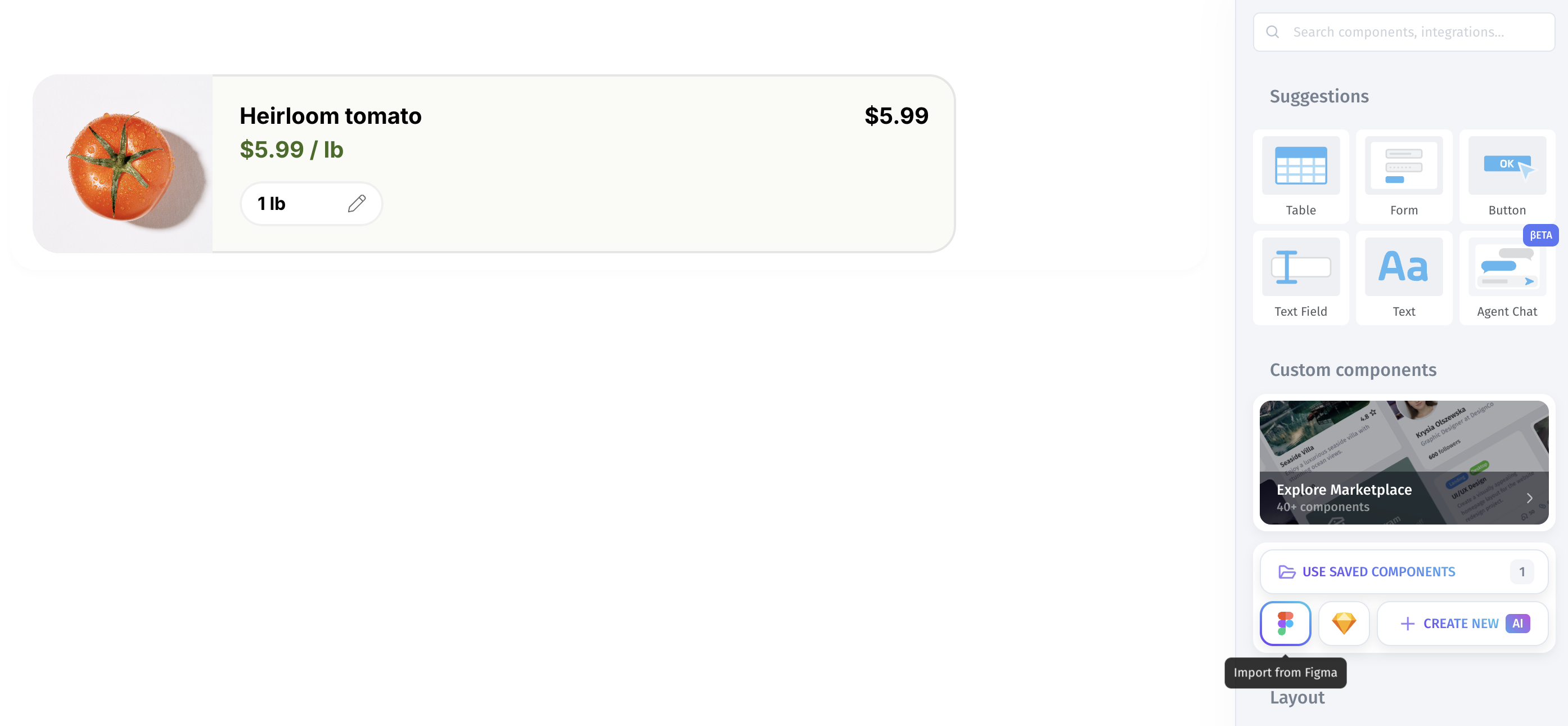
Lovable lets developers build any custom component directly in code. Jet Admin, instead, gives you a custom component builder + AI component creator and even Figma → component import: you can bring in a Figma component, turn it into a Jet Admin block, wire its inputs and actions once, and then reuse it across your apps like a native component.
Full freedom to build custom components in code
Custom component builder + AI component creator and Figma → component import, reusable across apps
Pixel-Perfect apps
Both tools can produce good-looking UIs, but the effort is different. Lovable gives you a generated app that developers and designers must refine in code to reach a truly polished look.
Jet Admin starts with high-quality, ready-made components, plus Figma component import and an AI component creator, so you can get near pixel-perfect internal tools and client portals much faster and with far less custom front-end work.
Can achieve pixel-perfect UI with custom design work in code
Polished components out of the box, Figma → component import, and AI component creator for fast, pixel-perfect business UIs
8. Themes and Branding
Themes
Lovable doesn’t really have a built-in theming system - you style things at the code level (colors, typography, spacing) like in any React app.
Jet Admin provides app-wide theming out of the box: you can set brand colors, fonts, and basic styles once and have them applied across pages and components, then fine-tune individual blocks only where needed.
Styling handled in code; no central theme panel
App-wide theming: set brand colors, fonts, and basic styles once and apply across pages and components
Branding
Lovable lets you brand your app like any custom project - you control logos, colors, and copy in code, but there’s no built-in “white-label” layer.
Jet Admin is more brand-ready: you can set logos, colors, custom domains, and hide Jet branding, and on higher plans use full white-label portals so the whole experience looks like your product, not a tool you’re built on.
Control logo, colors, and copy in code; no dedicated white-label layer
Built-in branding: custom domain, logo, colors, and full white-label client portals on higher plans
9. Data and Logic
In Lovable, most data modeling and business logic live in the app you generate - you connect your database, write queries, and implement rules in code. It’s flexible, but every change goes through developers.
Jet Admin gives you a data engine on top of your sources: built-in data viewer, relationships across multiple systems, filters, calculated fields, and server-side actions, plus visual workflows for approvals, automations, and background jobs. You still can add custom logic, but a lot of day-to-day data and process changes are handled by configuration instead of new code.
Integrations
Lovable connects to a modern backend stack, but most integrations with other systems (CRMs, billing, support tools, etc.) have to be wired in code inside your app.
Jet Admin comes with 100+ ready-made integrations for databases and SaaS tools (Postgres, MySQL, Snowflake, HubSpot, Salesforce, Stripe, Shopify, Zendesk, etc.), plus REST/GraphQL connectors, so you can plug in multiple systems visually and use them together in one app without building every integration from scratch.


Connects to your backend stack; most SaaS integrations added via custom code
100+ native integrations with databases and SaaS tools, plus REST/GraphQL connectors for anything custom
Automation (Workflows & Logic)
Lovable doesn’t have a built-in workflow engine - approvals, scheduled jobs, and multi-step processes all have to be coded inside the app.
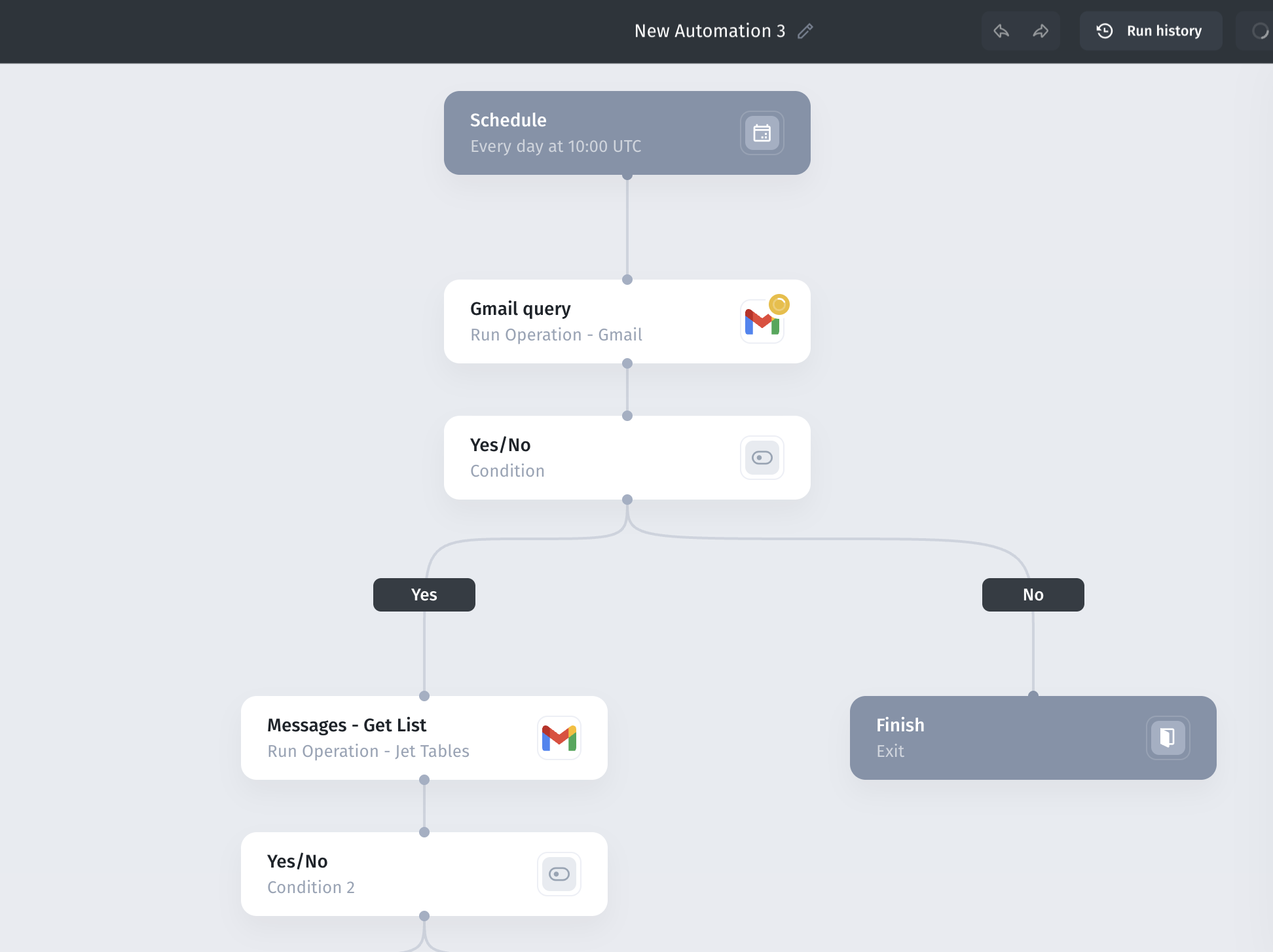
Jet Admin includes a visual workflow builder with conditions, branching, loops, schedulers, webhooks. That makes it much easier to automate real business processes without turning every workflow into a custom dev task.
Logic and conditionals
In Lovable, most logic and conditionals are written directly in code: you add checks, validations, and branching inside your components and backend, which gives developers full control but keeps non-technical users out.
Jet Admin lets you express much of this logic visually - you can set conditional visibility for components and use workflow conditions and branches without writing code. When needed, you can still drop into JS/SQL, but everyday rules are handled through readable, configurable conditions instead of custom logic scattered across the app.
Logic written directly in app code (if/else, validation, filters)
Visual conditions for components and workflows, with option to add custom code when needed
Data editing
In Lovable, data editing is something you build yourself: forms, validation, and inline edits all come from custom components and logic in the app.
Jet Admin has data editing built in - tables and forms support inline edits, bulk updates, validation rules, and permission-aware fields out of the box, so teams can safely view and modify records without extra engineering work.
10. External API
External API
In Lovable, any external API is something your team exposes manually inside the app backend - you decide the routes and logic, but you also have to build and maintain everything yourself.
Jet Admin adds a unified API layer on top of your data and apps: it can generate ready-to-use endpoints for your tables and actions, so other systems can read/write data or trigger workflows in Jet Admin without extra backend work, making integration much easier.

11. Deployment
Deployment
Lovable apps are deployed like any custom project: your team sets up hosting, environments, CI/CD, and monitors everything as a normal React backend app.
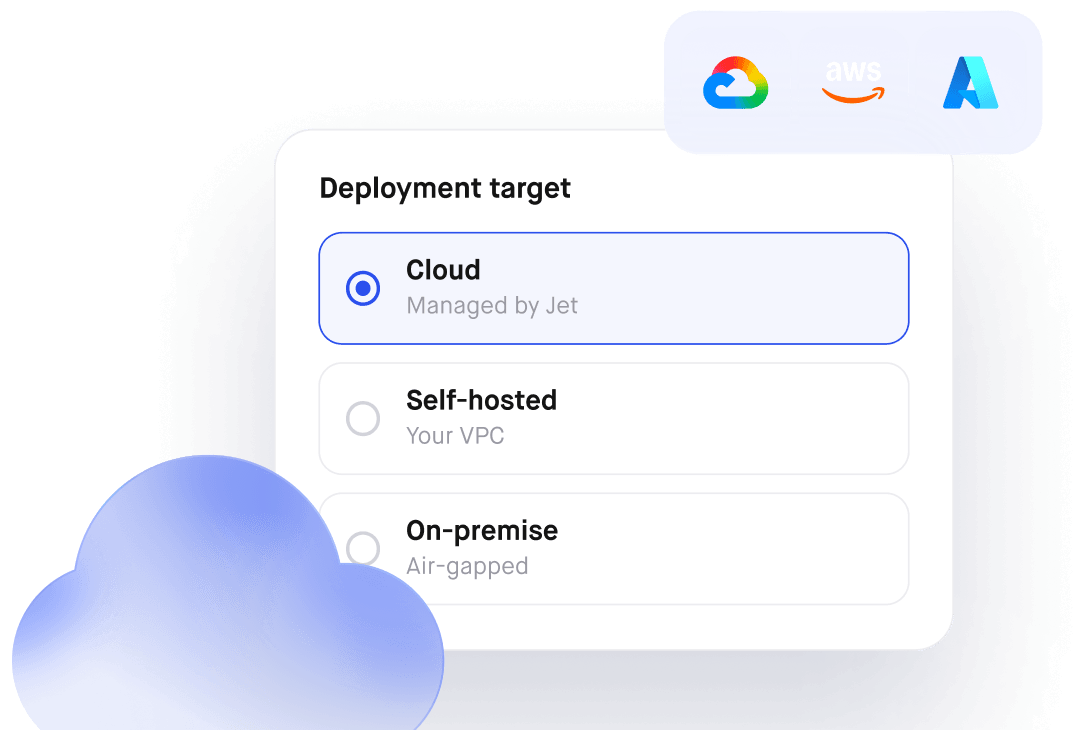
Jet Admin handles this for you with a managed cloud and, on higher plans, self-host/on-prem deployment with separate environments (dev/stage/prod), so you get production-ready hosting and governance without building the whole deployment pipeline yourself.
Deployed as a custom web app on your own hosting/infra
Managed cloud by default, with self-host/on-prem and separate envs on higher plans
12. Releases & version control
Releases & version control
Lovable leans on a classic Git-based workflow: the app lives in a repo, so releases, branches, and rollbacks are handled like any other software project by your dev team.
Jet Admin keeps most changes inside the platform with versioned edits, environments (dev/stage/prod), and safe publishing, so non-technical users can ship updates without touching Git - while developers can still integrate with Git and external CI/CD when deeper control is needed.
Full Git-based workflow: branches, PRs, and rollbacks in your repo
Versioned changes and separate environments (dev/stage/prod) with safe publishing inside the platform
13. Security and Data Privacy
Security and Data Privacy
Lovable gives you a hosted app plus your own code in GitHub, but most security and privacy measures are your responsibility: how you store data, isolate tenants, log access, and meet compliance (SOC2/GDPR, data residency, etc.) all depends on how your team designs and operates the stack. It does offer group-based access control on higher plans, but there’s no full, opinionated enterprise layer built into the product.
Jet Admin treats security and privacy as core platform features. You get granular permissions, SSO (SAML/Okta/OAuth), audit logs, and alignment with SOC2/GDPR, along with the option to run Jet Admin in your own environment (self-host / VPC) when data residency or strict compliance is required. For teams in regulated or security-sensitive industries, this makes Jet Admin a much safer and more straightforward choice than stitching everything together around Lovable.
App security and data privacy handled mostly in your own code and infrastructure
Granular permissions, SSO, audit logs, self-host/VPC options, designed to meet strict compliance needs
15. Lovable and Jet Admin alternative
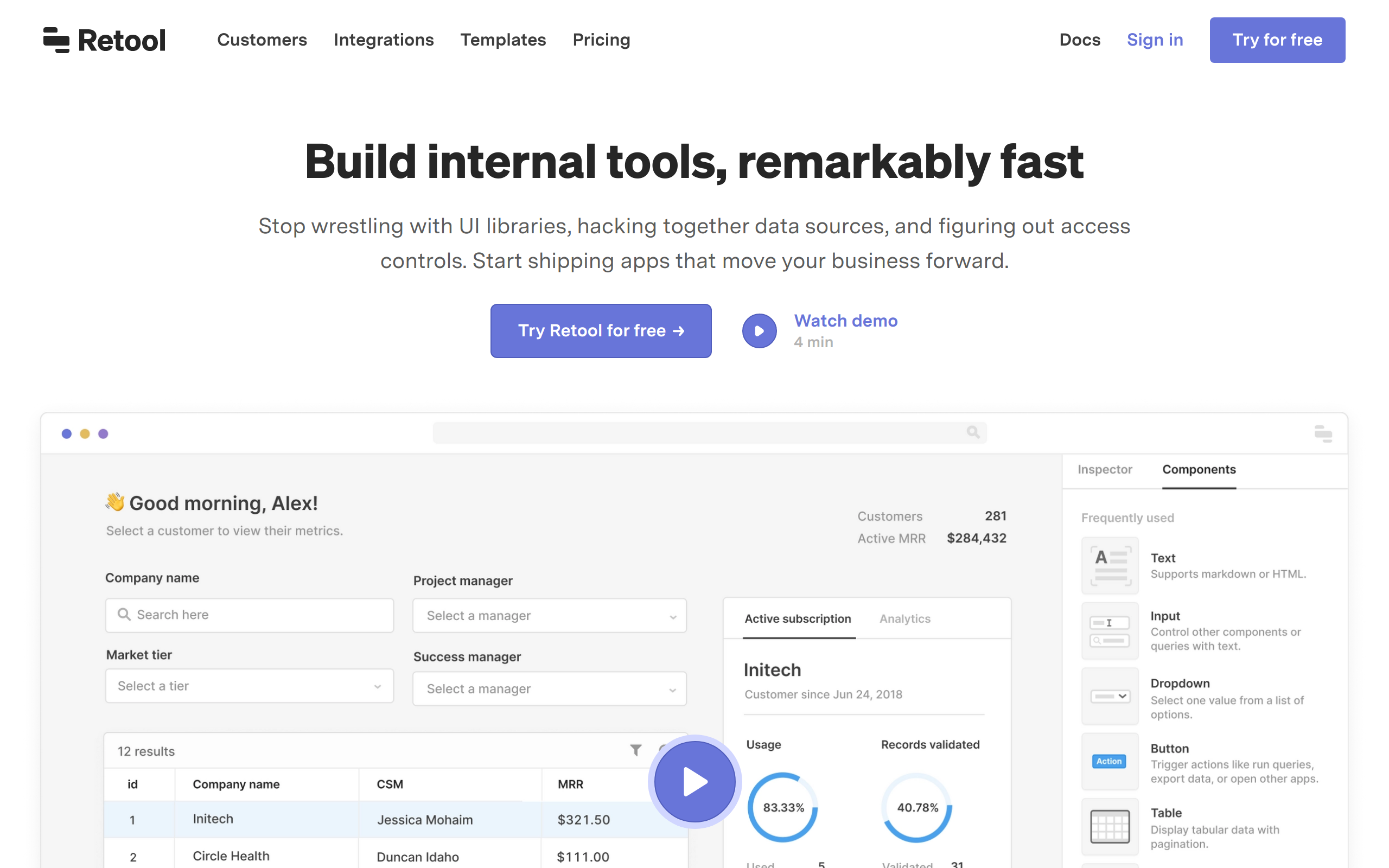
Retool is a popular low-code platform for building internal tools, aimed mainly at developer-heavy teams. It gives engineers a drag-and-drop UI plus full control with JavaScript and SQL, making it a strong option when you want to stay very code-centric.
If you prefer a more dev-first internal tools platform, Retool is a strong alternative to both Lovable and Jet Admin. Lovable is best for AI-generated codebases, Jet Admin for long-lived portals and business apps, and Retool for teams that want to stay deep in JS/SQL while still speeding up internal app development.